What Cursor's homepage gets right about social proof
Cursor's homepage hands its pitch to Patrick Collison, Jensen Huang, and Andrej Karpathy. Here is how the named social proof does the selling, and how to copy it.

Social proof sells software better than any adjective you can write about your own product. The homepage for Cursor, the AI coding tool from Anysphere, is the cleanest example live right now. The headline states the outcome, one button asks for the download, and the middle of the page hands the pitch to people the buyer already trusts: Patrick Collison, Jensen Huang, Andrej Karpathy, Greg Brockman.
We pulled the page apart to see what makes it convert, and which moves you can copy on your own site this week.
The hero says what you get, then stops
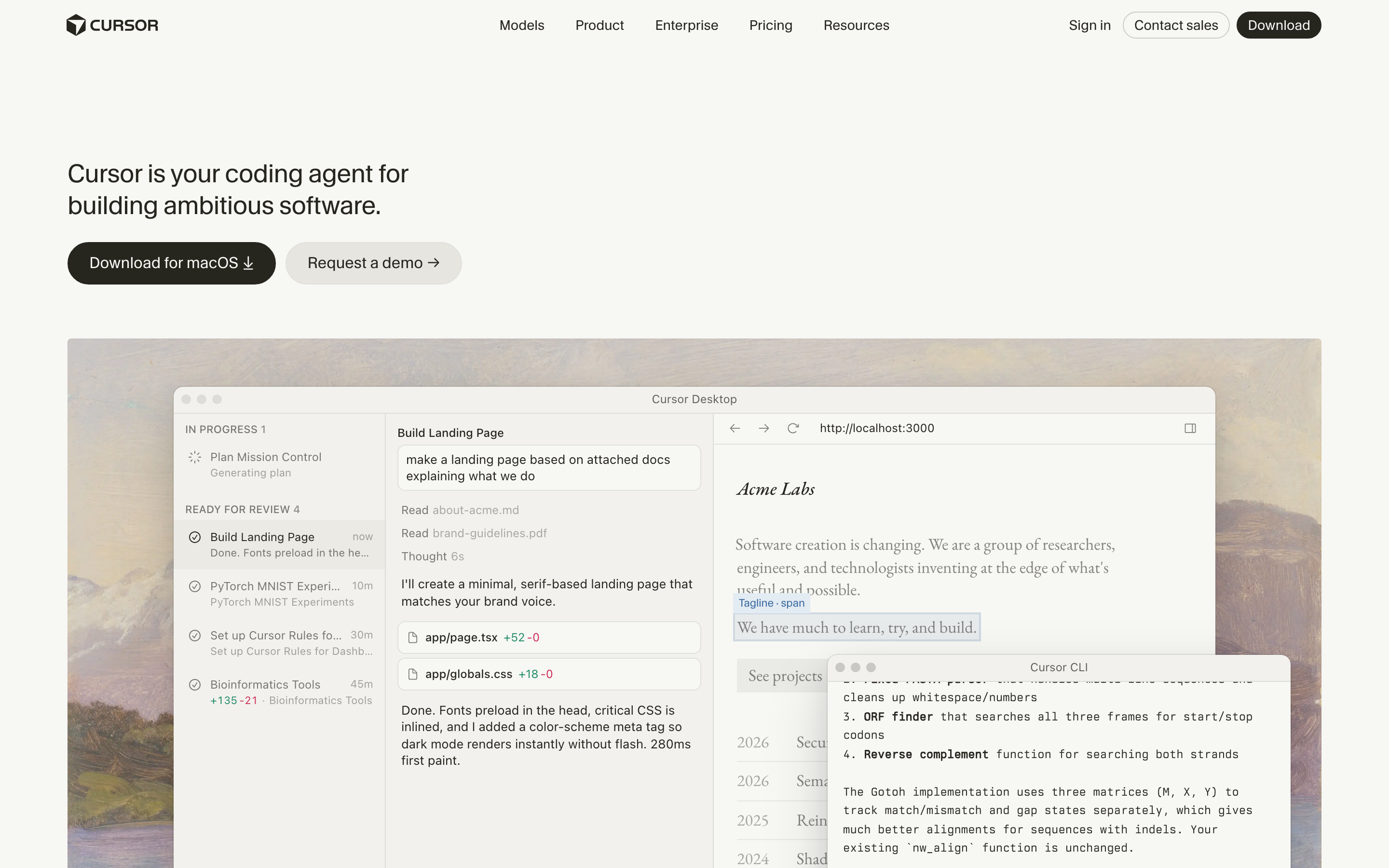
The first line is a definition: "Cursor is your coding agent for building ambitious software." No metaphor, no cleverness. A developer reads it once and knows what the thing is and what it does for them. The subhead adds who builds it, and the page shows a live product shot of the agent writing a landing page.
Under the headline sit two buttons. "Download for macOS" is the dominant one, dark and first. "Request a demo" is the quiet second option for buyers who are not ready to install. One primary action, repeated all the way down the page, ending on a plain "Try Cursor now" above the footer. That discipline is the Rule of One: every section points at the same click.
Why the social proof works
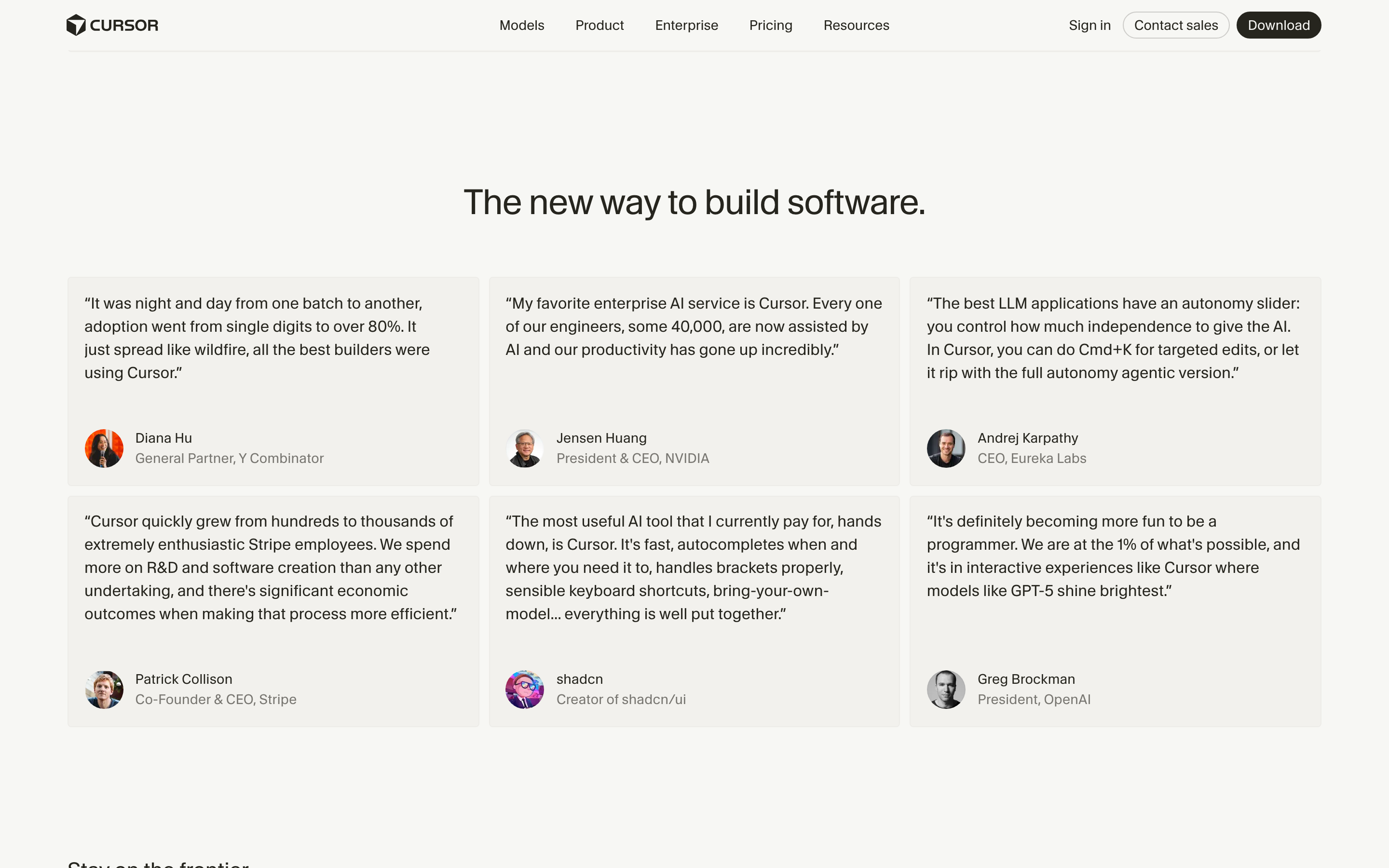
Halfway down, under the line "The new way to build software," Cursor stops talking about itself and lets six people vouch for it. Every quote carries a real name, a real title, and a face. Patrick Collison, the CEO of Stripe: "The most useful AI tool that I currently pay for, hands down, is Cursor." Jensen Huang of NVIDIA says "some 40,000" of his engineers are now assisted by AI. Diana Hu of Y Combinator says adoption "went from single digits to over 80%."
Two things make this land. The names belong to people a room full of engineers already respects, so the endorsement borrows their credibility. And the quotes carry numbers instead of adjectives. "40,000 engineers" and "over 80% adoption" are checkable claims, and checkable claims read as true. A generic "loved by developers everywhere" would do none of that work.
The page also drops one flat line near the top: "Trusted by over half of the Fortune 500." A specific claim like that beats a wall of grey logos, because the reader does the math on how many companies that is. For the deeper version of this pattern, our teardown of how Ramp's landing pages convert cold traffic shows the same trust-first move working on a colder audience.
The free tier does the closing
Click Download and you land in a free plan, Hobby, that asks for no credit card. That matters, because the strongest proof a developer tool can offer is the tool itself. The pricing page then lays out a clean ladder: Hobby at no cost, Individual at $20 a month, Teams at $40 per user, Enterprise on custom pricing. Each tier reads "everything in the last one, plus," so the upgrade path is obvious.
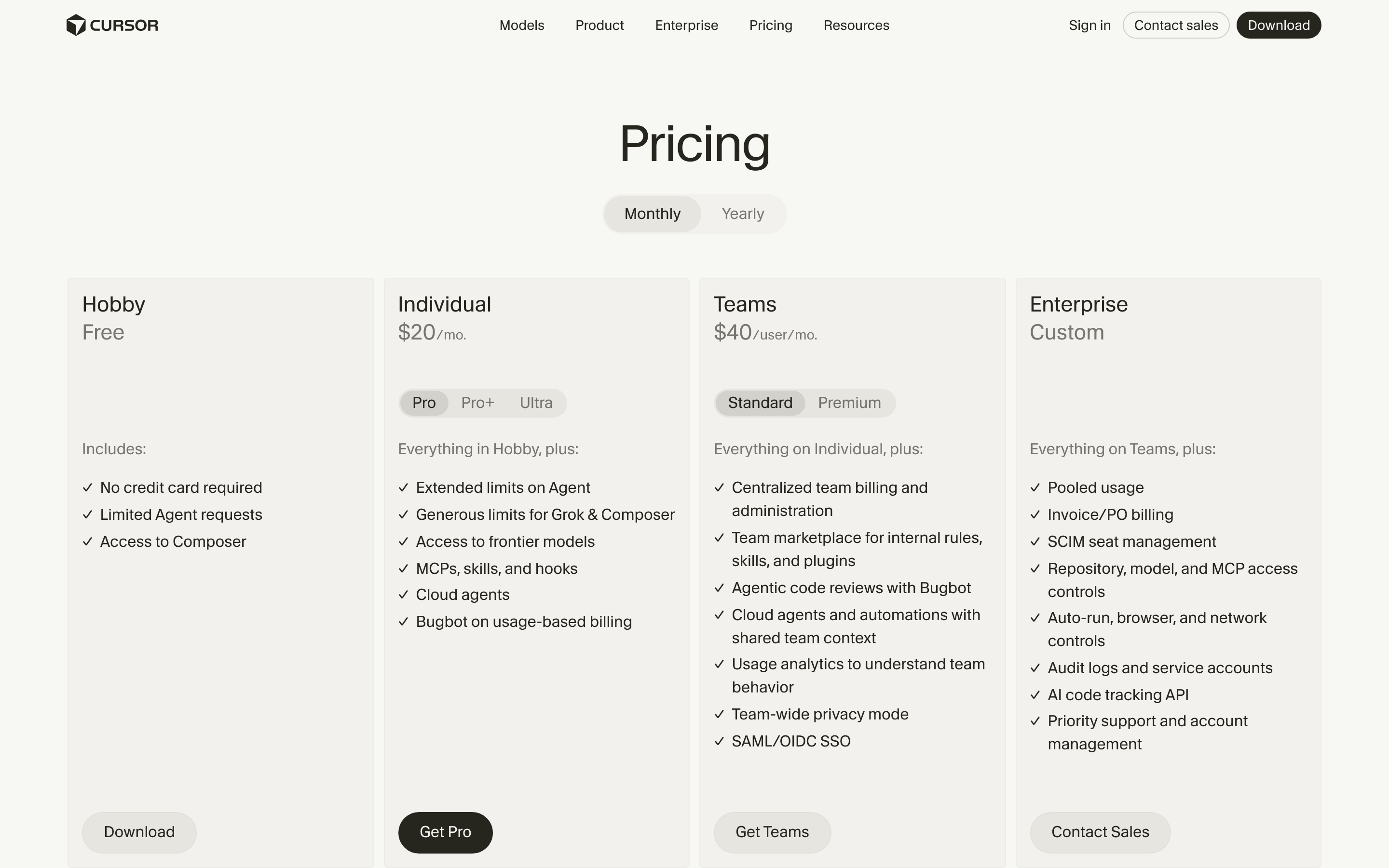
The CTA changes with the buyer's stage: Download for the free tier, Get Pro for the individual, Get Teams for the group, Contact Sales for the enterprise. Nobody has to book a call to try the product, and the people who need procurement still get a door. It is the same self-serve logic we broke down in how PostHog's pricing page replaces the sales call.
What to copy
You do not need Collison in your testimonials to use this. Four moves travel to almost any site. Open with a one-line definition of what you do and who it is for. Pick one primary action and repeat it down the page instead of scattering five. Swap adjective testimonials for named quotes that carry a number. And if your product can demo itself, put a free or trial path first so the tool does the arguing.
Most sites get the design right and the proof wrong. They hide testimonials in a carousel, strip out the names, and lead with "powerful" and "intuitive." Cursor does the reverse, and the page reads like a room full of trusted people nodding.
Want help turning your own proof into a page that converts? That is the kind of work we do at vibhe, and we are happy to take a look.


