How Framer's free plan turns every site into a growth loop
Every free Framer site carries a badge that links home. Here's how that growth loop works, and the three rules for building one into your product.

Every site built on Framer's free plan ships with a small badge in the corner that reads "Made in Framer," and it links straight back to Framer. That badge is a growth loop. Each free site becomes a live ad for the tool that made it, seen by everyone who visits, pointing the next designer back to the signup page. Here's how the mechanism works, and what a B2B or SaaS team can copy without a $2 billion budget.
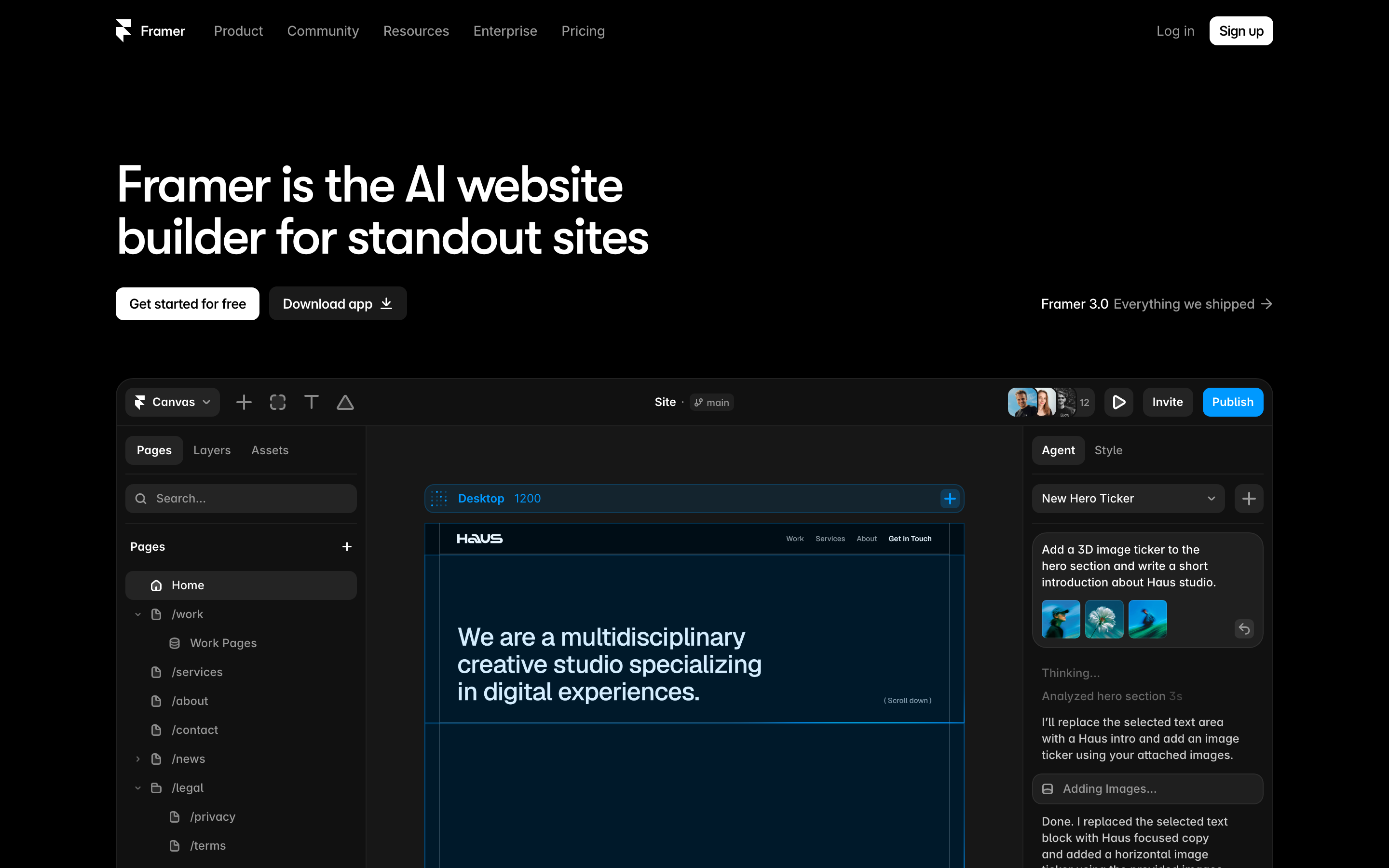
The badge turns every free user into a distribution channel
Framer's free plan is generous. You get up to 1,000 pages, 10 CMS collections, and 3 editors, all at no cost. The catch is the badge. Publish for free and your site lives on a .framer.website subdomain with the "Made in Framer" mark fixed in the corner. You can't hide it with CSS or custom code. The only way to remove it is to upgrade.
Look at that from Framer's side. Every hobbyist, freelancer, and student who ships a free site is now running an ad for Framer, on a page they chose to promote. Framer reported 10.5 million new sites created in its 2025 year in review. Even a fraction of those carrying a visible, clickable badge is a distribution channel no ad budget buys. And the people most likely to click "Made in Framer" are exactly the people who might build the next site: other designers.
Framer charges for vanity and gives away utility
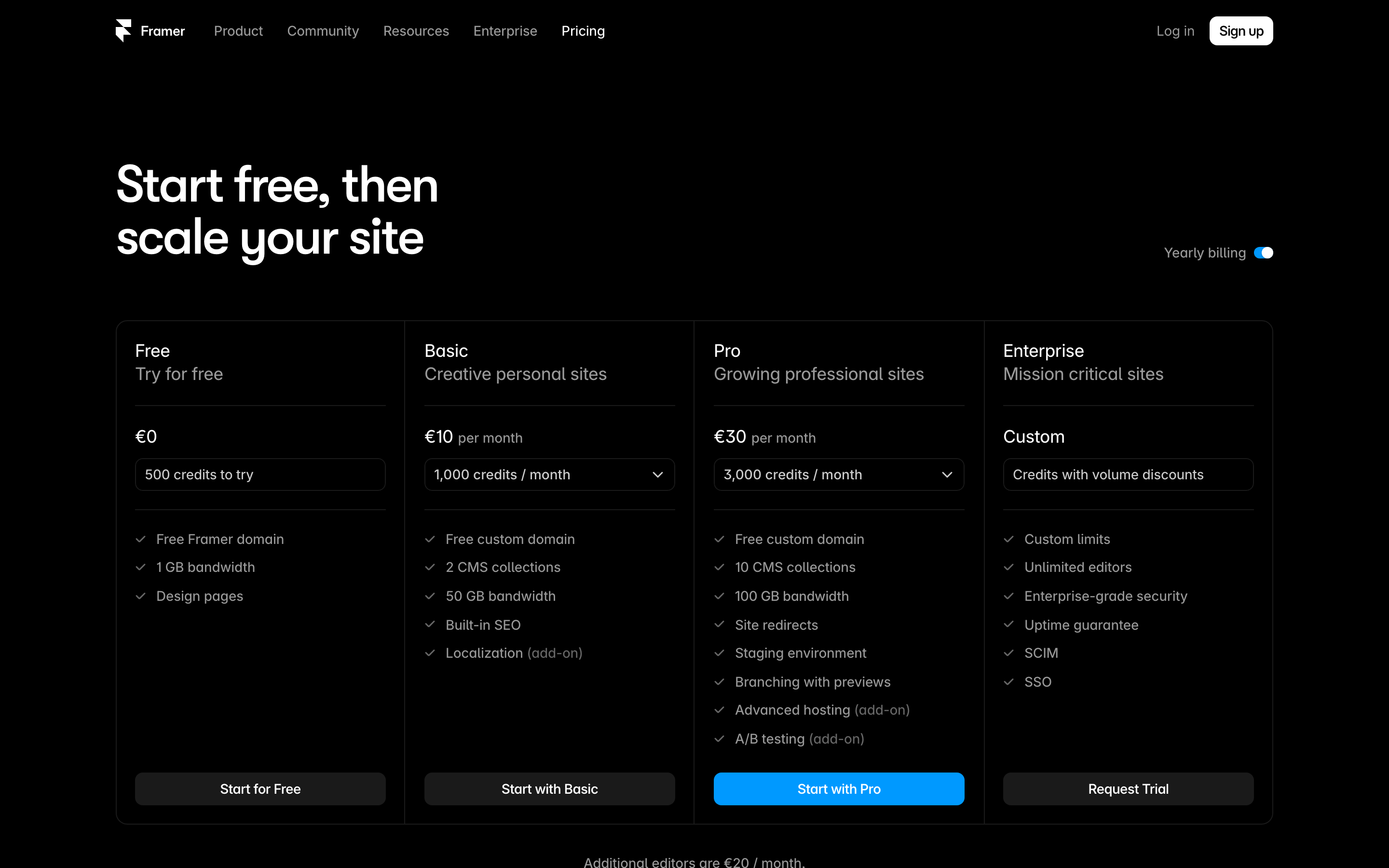
Notice what Framer charges for. The free plan does real work: you can design, build, and publish a whole site. What you pay for, at $10 a month on the Basic plan, is a custom domain and the removal of the badge. Framer put the paywall on the two things a professional cannot live with, a client site on someone.framer.website and someone else's logo in the corner, and left the actual capability free.
That's the part worth copying. The free tier has to be good enough that people publish real, public work with it, because the public work is the marketing. If the free plan were crippled, no one would ship, and the loop would never turn. Framer gives away the building and charges for the polish.
The loop shows up in the numbers. When Framer raised at a $2 billion valuation in August 2025, it reported annual recurring revenue of $50 million, double the year before. Free sites feed paid upgrades on their own: someone ships on the free plan, lands a client, and needs the custom domain. The badge did the first sell.
The subdomain concentrates the SEO
There's a second, quieter loop under the badge. Millions of free sites on *.framer.website all feed link equity and brand signals toward one root. Every time someone shares a Framer-built site, links to it, or ranks it, a sliver of that authority reflects on Framer itself. The subdomain does double duty: it nudges the user toward a paid custom domain, and it pools the SEO value of every free site under Framer's own name.
The marketplace is Framer's second growth loop
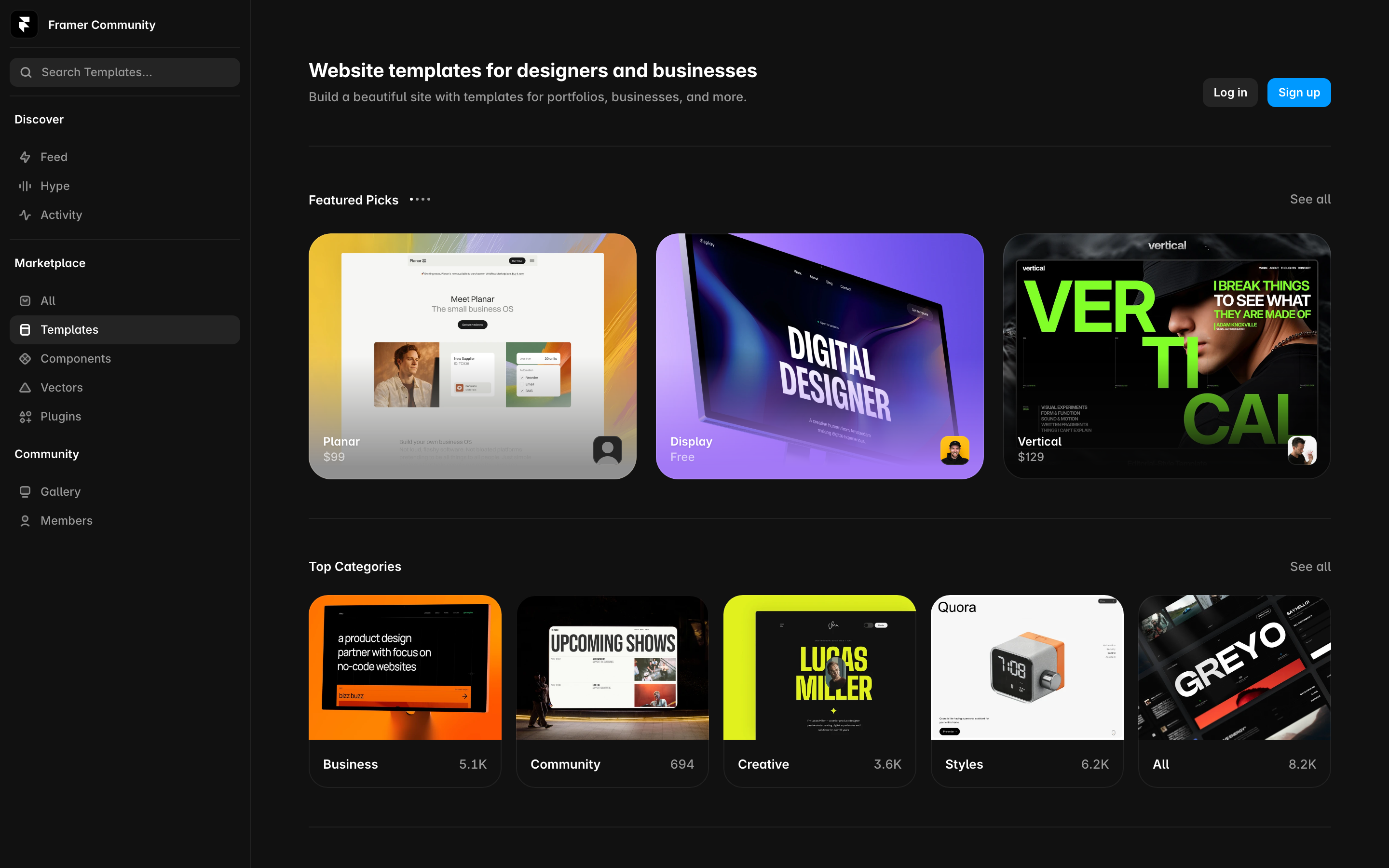
The badge brings people in. The marketplace keeps them building and pulls in more. Framer's community marketplace lists more than 12,000 resources: templates, components, plugins, and vectors, most made by independent creators who sell them and keep the revenue. Those creators have their own audiences. When a creator markets a Framer template, they market Framer. New buyers arrive, some become creators, and the shelf grows. It's the same two-sided pattern behind Notion's template gallery, and it compounds for the same reason: the platform's own users do the acquisition.
What you can copy
You probably don't host a million sites. The mechanics still work at any size. Find the artifact your product creates that other people see, then make your brand ride on it for free users. A "sent with," a "book with," a public share page. Cal.com does it on every booking page. Three rules make it turn every time: the free tier has to produce something public, the branding has to be visible to the right next customer, and the upgrade has to remove the branding rather than the function. Get one of those wrong and the loop stalls.
One caution. Framer can charge for badge removal because designers care intensely about how a client-facing site looks. A badge on an internal dashboard buys you nothing. The loop only turns when the free artifact is something users want to show off.
If you want help finding the growth loop hiding in your own product and turning it into a plan, that's the kind of work we do.


