How Notion's template gallery became a growth loop
Notion turned its template gallery into a growth loop: 30,000 user-built templates that rank on Google and activate new users. Here's how to copy the mechanism.

Notion's template gallery is a growth loop dressed up as a help center. Around 20,000 creators build free templates, each template becomes a page that ranks for a real search, and every download drops a new user into a working setup instead of a blank screen. Notion gets tens of thousands of landing pages and faster activation, and it writes almost none of them.
What the template gallery actually is
Open the Notion marketplace and the scale sits right on the page: more than 30,000 templates, 348 categories, and 20,891 creators as of July 2026. The categories map to jobs people already have. Job application tracking holds 617 templates. Portfolio has 564. The PARA method has 116. These aren't features Notion built. They're setups its users built and published, and the company organizes them into a catalog anyone can browse.
Every template is an SEO landing page
Here's the part most teams miss. Each category is a page aimed at a query someone types into Google. The job application tracking page exists because "job application tracking template" is a search with steady demand and obvious intent. The visitor wants a tracker, and the page hands them dozens. That's a clean match between the page and what the searcher meant, the same principle we covered in matching your page to search intent.
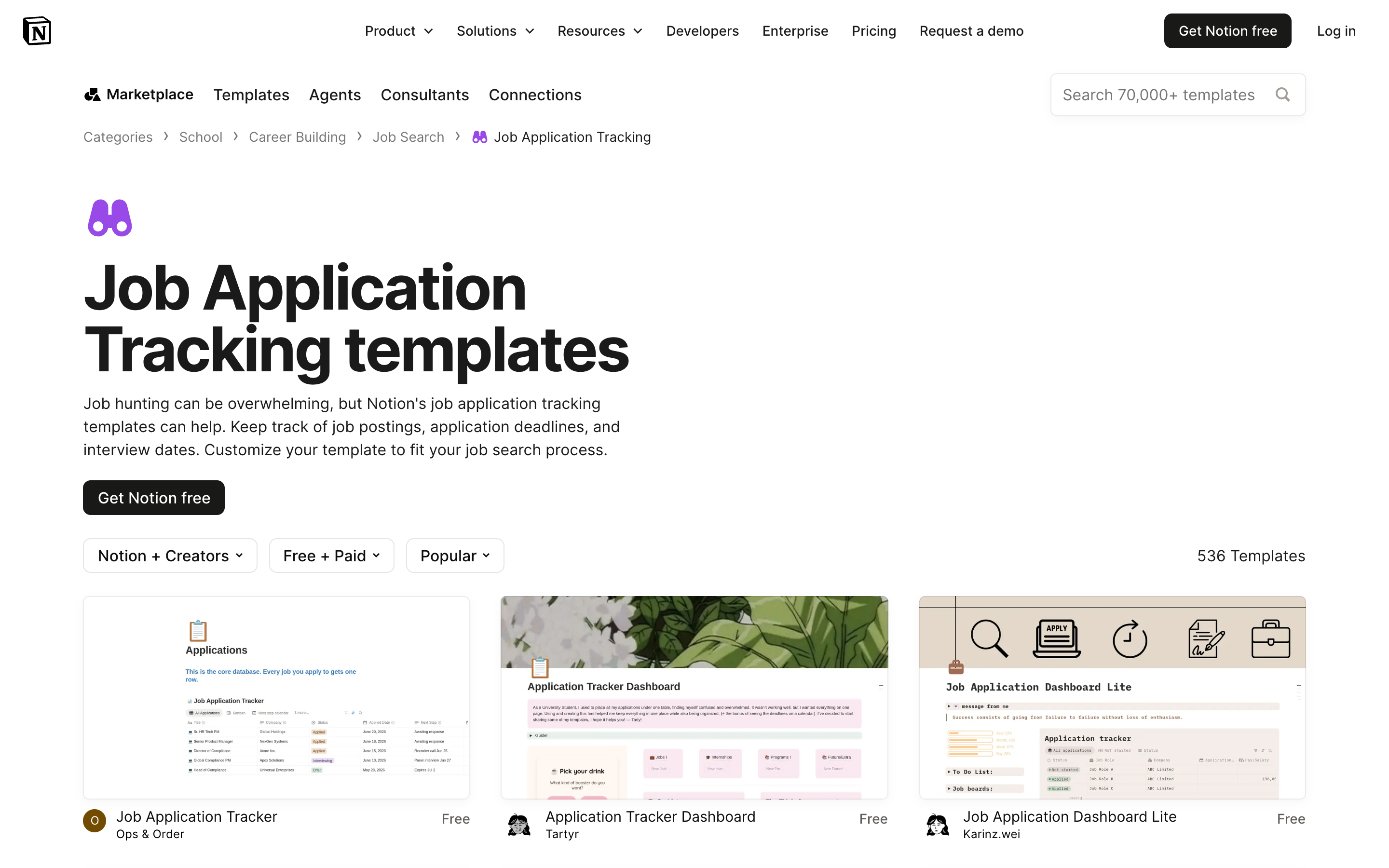
Now multiply that by 348 categories. Notion covers thousands of long-tail queries without a content team writing thousands of posts, because every creator who publishes a template hands Notion another indexable page aimed at a specific need. A normal blog would need writers, editors, and a schedule to reach that coverage. The gallery reaches it as a side effect of people wanting to share their work.
The download is the activation
A free tool usually greets a new user with an empty screen and a blinking cursor. The template flips that. Someone searching for a job tracker clicks "Get template," signs up for the free plan, and lands inside a database that already has the columns, the views, and a few sample rows. They reach the first useful moment in seconds, before they've learned what a Notion database even is.
That shortcut matters more than any feature list. Activation is the moment a user gets real value, and a pre-built workspace delivers it faster than a tutorial ever could. The free plan is the on-ramp, and the template is the reason the on-ramp leads somewhere.
The loop that builds itself
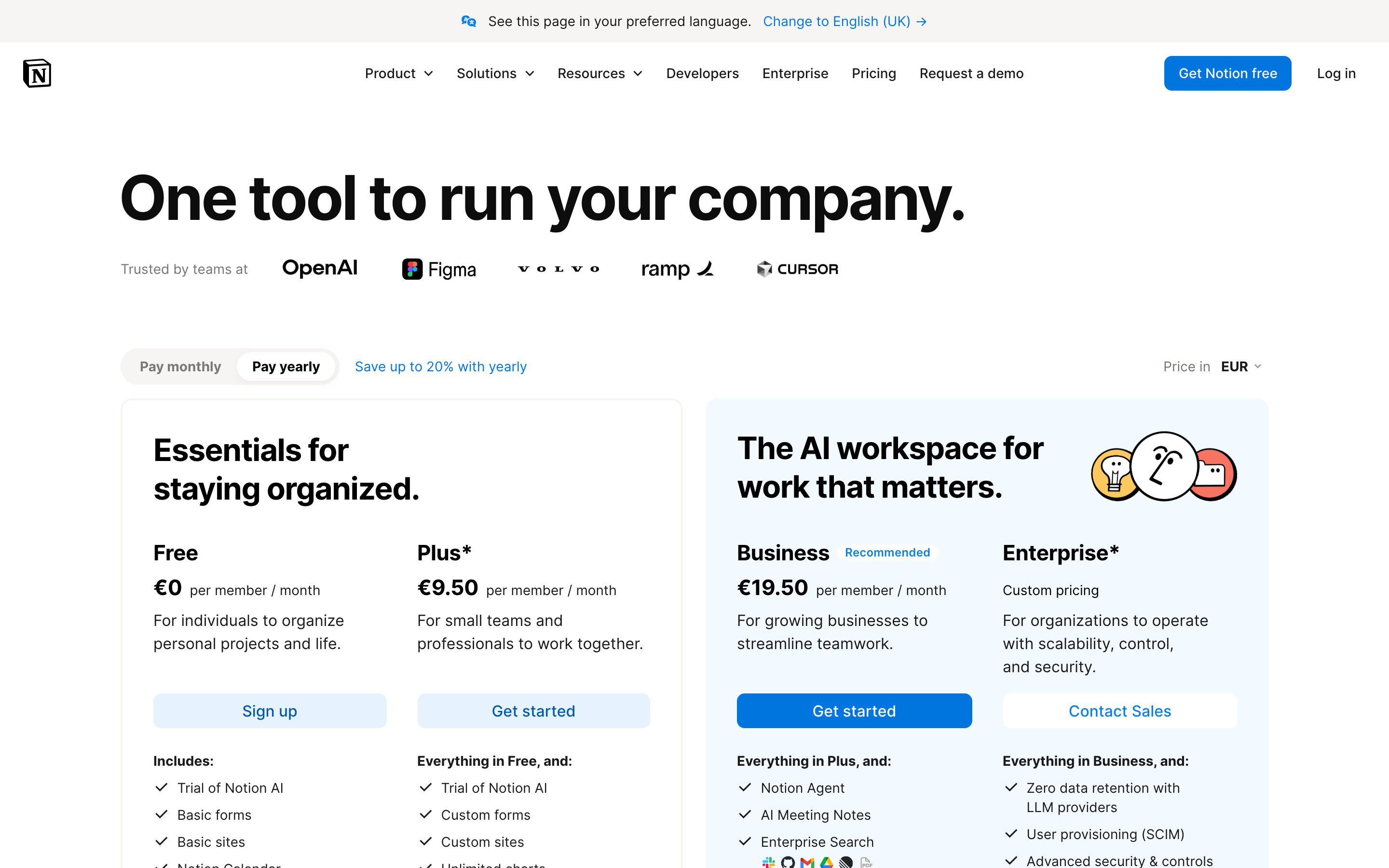
Now the parts connect. Creators build templates to reach an audience, and often to sell paid versions of their work. Notion gets a ranking page and an activated user out of each one. Some of those new users become the next batch of creators, and the catalog climbs past 30,000 without Notion paying per template. The homepage sells the product; the gallery quietly feeds it.
The engine runs because the incentives line up. The creator wants distribution. The searcher wants a ready setup. Notion wants signups that stick. One template satisfies all three at once, which is why the loop keeps turning long after any single marketing campaign would have ended.
How to copy this without 20,000 creators
You don't need a marketplace to use the mechanism. Start with the setups your best customers already build by hand inside your product. Turn each one into a standalone page that targets the exact query behind it, then make that page hand the visitor a working version in one click. A single strong page beats a pile of thin ones, which is the case we made in writing one page that ranks instead of ten that don't.
Three questions decide whether it works. Does the page match a query with real intent? Does the download land the user in value rather than a blank state? Does someone other than you have a reason to keep building these? Answer yes to all three and you have a loop, not a one-off campaign.
If you want help turning your best use cases into pages that rank and activate, that's the kind of growth work we do at vibhe.


