How Cal.com turns every booking page into a growth loop
Cal.com's free plan puts its wordmark on every booking page a user shares, then charges to take it off. Here is the growth loop, and how to copy it.

Book a meeting with anyone on Cal.com's free plan and you see the Cal.com wordmark sitting under the calendar. That is the growth loop in one screen: users hand the product to the people they meet with, and the only way to take the mark off is to move up to a paid plan at $12 per user per month. The scheduling is the feature. The booking page is the channel.
Cal.com is an open-source scheduling tool with a free tier, three paid tiers, and a homepage that claims fast-growing companies as customers. We looked at three of its live pages to see where the growth comes from.
The free plan ships a billboard with every meeting
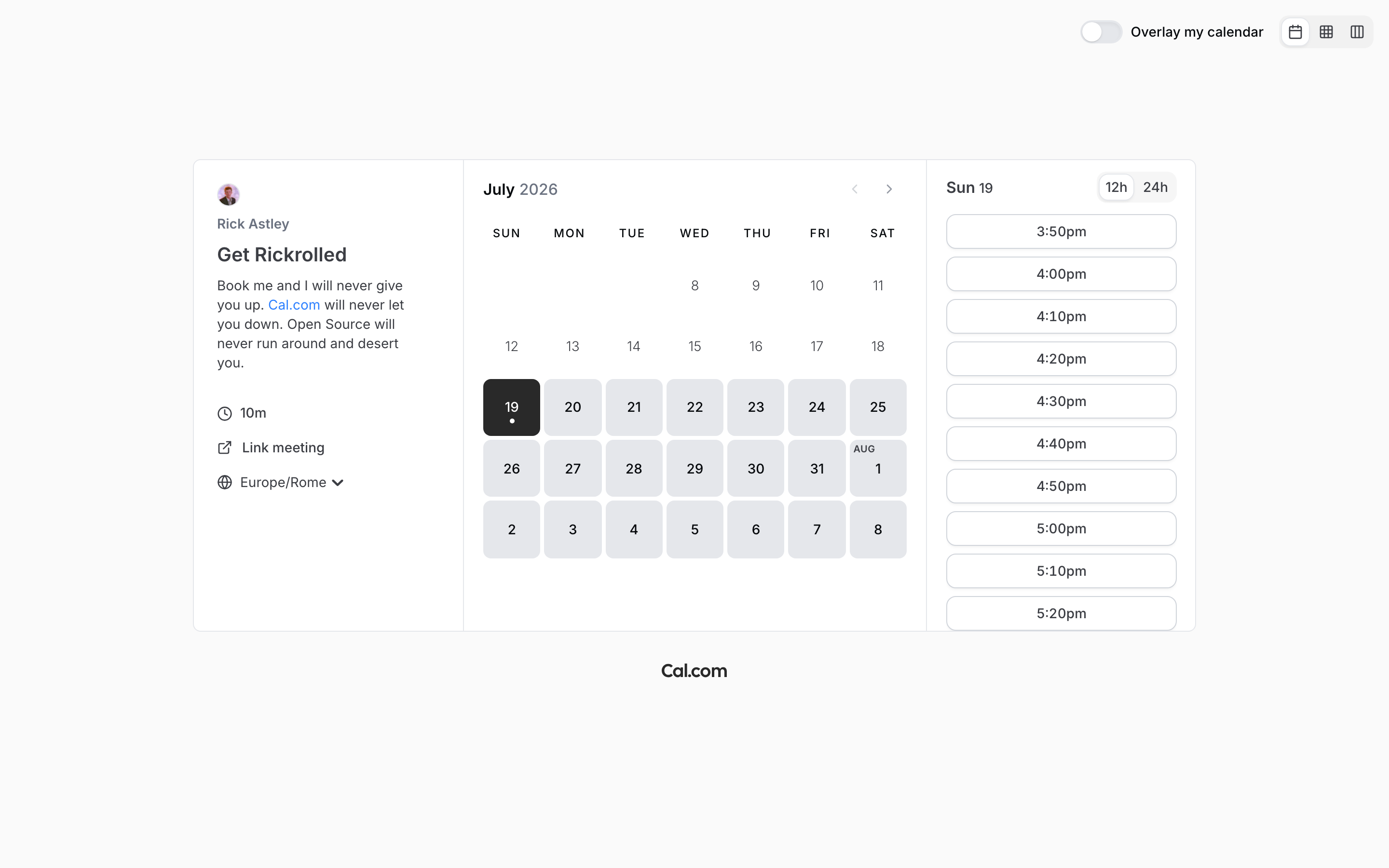
This is a public booking page. Name at the top left, event description, duration, timezone, then the calendar and the open slots. Look at the bottom. The Cal.com wordmark sits centered under the whole booker, in the same grey as the rest of the chrome.
Every invitee sees it. Someone who takes eight calls a month puts that mark in front of eight people, and each of them is looking at it at the exact moment they are thinking about scheduling. No ad buy reaches a person with that much intent that cheaply. The people who see it are also, by definition, the kind of person who books calls, which is the entire target market.
The paywall sits on the loop, not on the capability
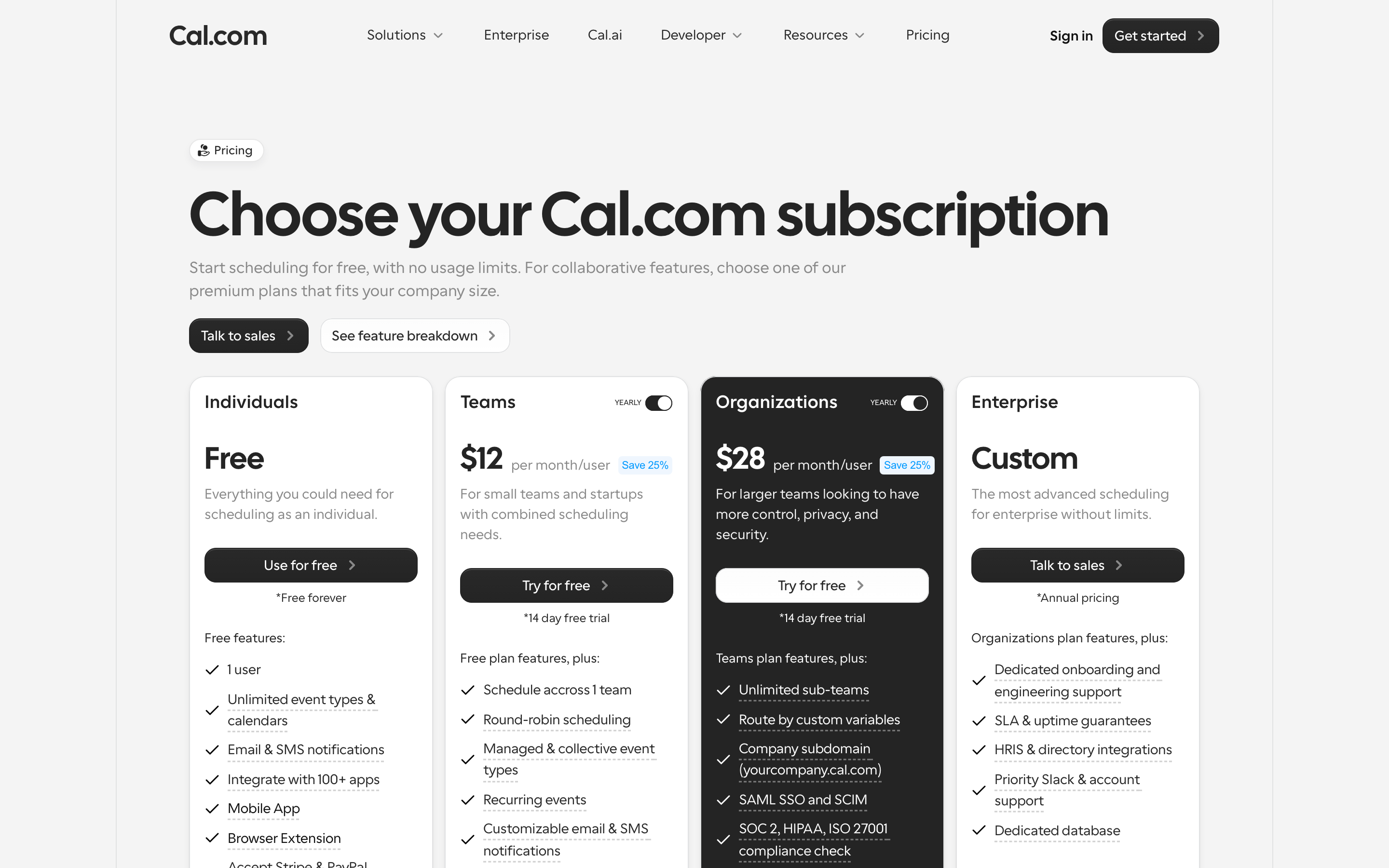
Read what the free plan includes: one user, unlimited event types and calendars, 100 plus app integrations, Stripe and PayPal payments, two-way Salesforce and HubSpot sync, a Calendly import. That is a working product, given away.
Now read the first line of the Teams plan at $12 per user per month. Alongside round-robin scheduling and routing forms sits "Remove Cal.com branding". The first thing a growing user pays for is the removal of Cal.com's distribution. Capability is free, the surface costs money, and the price goes up as the account gets more valuable: $28 per user per month at Organizations, custom pricing at Enterprise.
That structure only works if the free plan is genuinely useful. A crippled free tier gets abandoned before anyone shares a link, and a loop with no shared link is a marketing page. The same self-serve logic runs through the way PostHog's pricing page replaces the sales call: let people get to value alone, then charge for the thing they only want once they have grown.
The homepage sells three audiences with one line
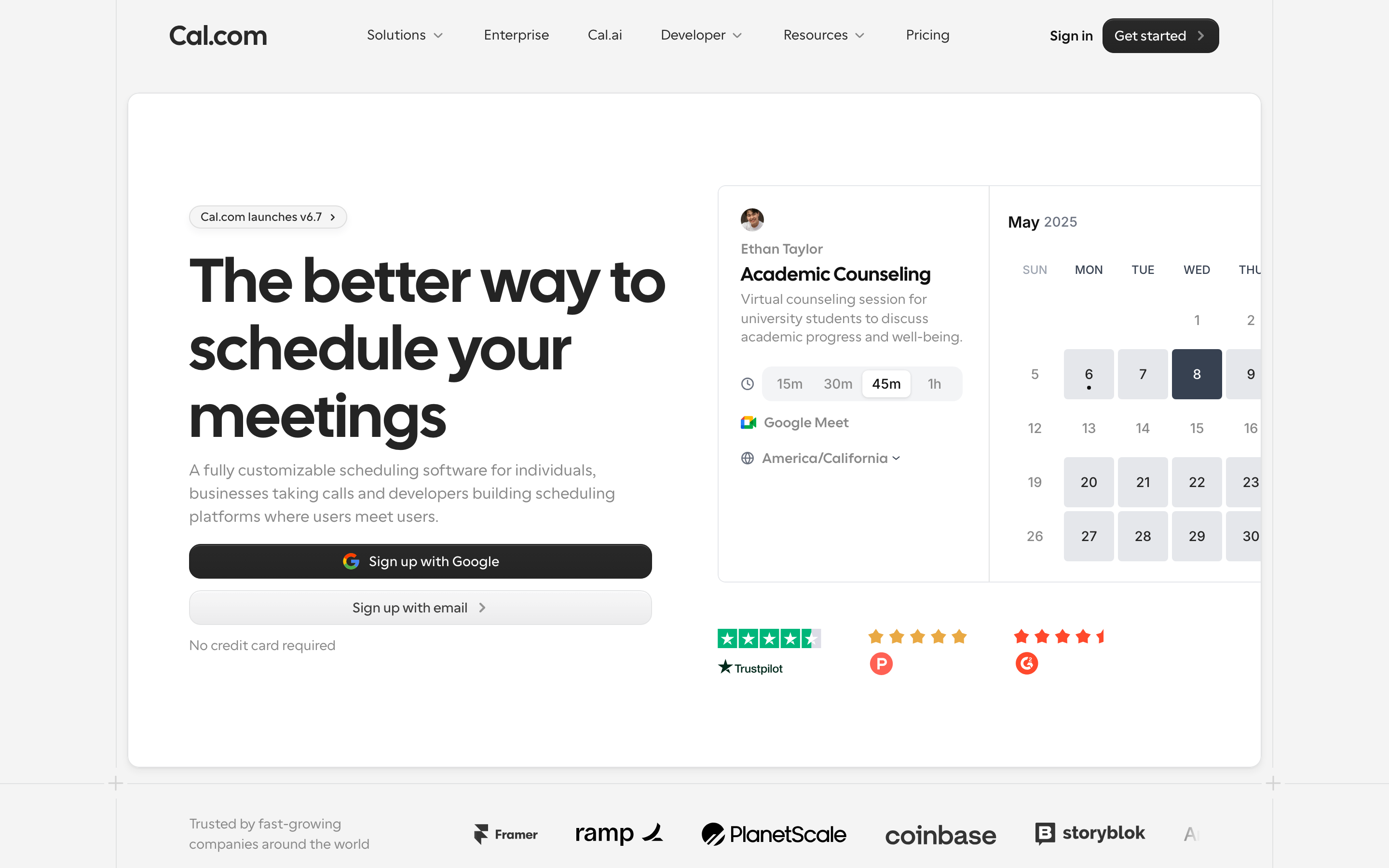
The headline is plain: "The better way to schedule your meetings". The subhead does the segmentation work, naming individuals, businesses taking calls, and developers building scheduling into their own products. Three buyers, one page, no separate landing pages competing for the same query.
The signup is two buttons, Google or email, with "No credit card required" underneath. That matters for the loop. A person who arrived from a booking page is one click deep into an idea they had thirty seconds ago. Any form longer than that and the idea is gone.
How to build the same growth loop without a booking page
Most B2B products have an artifact their customers already send to other people. Proposals, reports, status pages, shared dashboards, invoices, receipts, embeds. That artifact is the loop. Four moves to make it work:
- Find the shared artifact. Ask which screen in your product gets seen by someone who does not have an account. If the answer is none, build one before you build anything else.
- Mark it once, quietly. One wordmark, at the bottom, in the chrome colour. A loud mark makes users hide the artifact, and a hidden artifact reaches nobody.
- Point the mark at a page built for that visitor. Not the homepage. A page that opens on what they just saw, with the same two-click signup Cal.com uses.
- Price the removal, never the artifact. Charging to send the report kills the loop. Charging to white-label it grows revenue as the account grows.
Notion's template gallery runs the same idea from the other end, with users publishing pages that strangers find in search. Cal.com's version needs no search at all, because the distribution rides on a meeting that was going to happen anyway.
Where the loop leaks
One user on the free plan can book two hundred meetings a month, show the wordmark two hundred times, and pay nothing. Removal is bundled with team features, so the trigger to upgrade is hiring, not volume. A heavy solo user gives Cal.com reach and no revenue.
That looks like a deliberate trade. The solo user is the cheapest distribution Cal.com has, and charging them would switch off the channel. Worth checking on your own pricing: if your upgrade trigger is a team, your highest-volume individual users are a marketing budget, and you should measure them like one. Tag the link on the artifact, count the signups it brings, and put that number next to your paid spend.
If you want help finding the artifact your customers already share and turning it into a loop you can measure, that is the work we do.


