How PostHog's self-serve pricing page replaces the sales call
PostHog publishes its per-event rate, its free tier limits, and a billing cap, so the pricing page closes what a sales call usually would. Here's what to copy.

A self-serve pricing page has to answer the three questions a sales call answers: what this costs per unit, what you get for nothing, and how the bill can surprise you. PostHog answers all three in numbers, before it asks for your email. Product analytics costs $0.00005 per event after the first million each month. That rate is on the page, in public, next to a free plan that never expires.
The pricing page is doing the selling. Below is how PostHog built it, and the four moves worth copying.
What the free tier actually buys
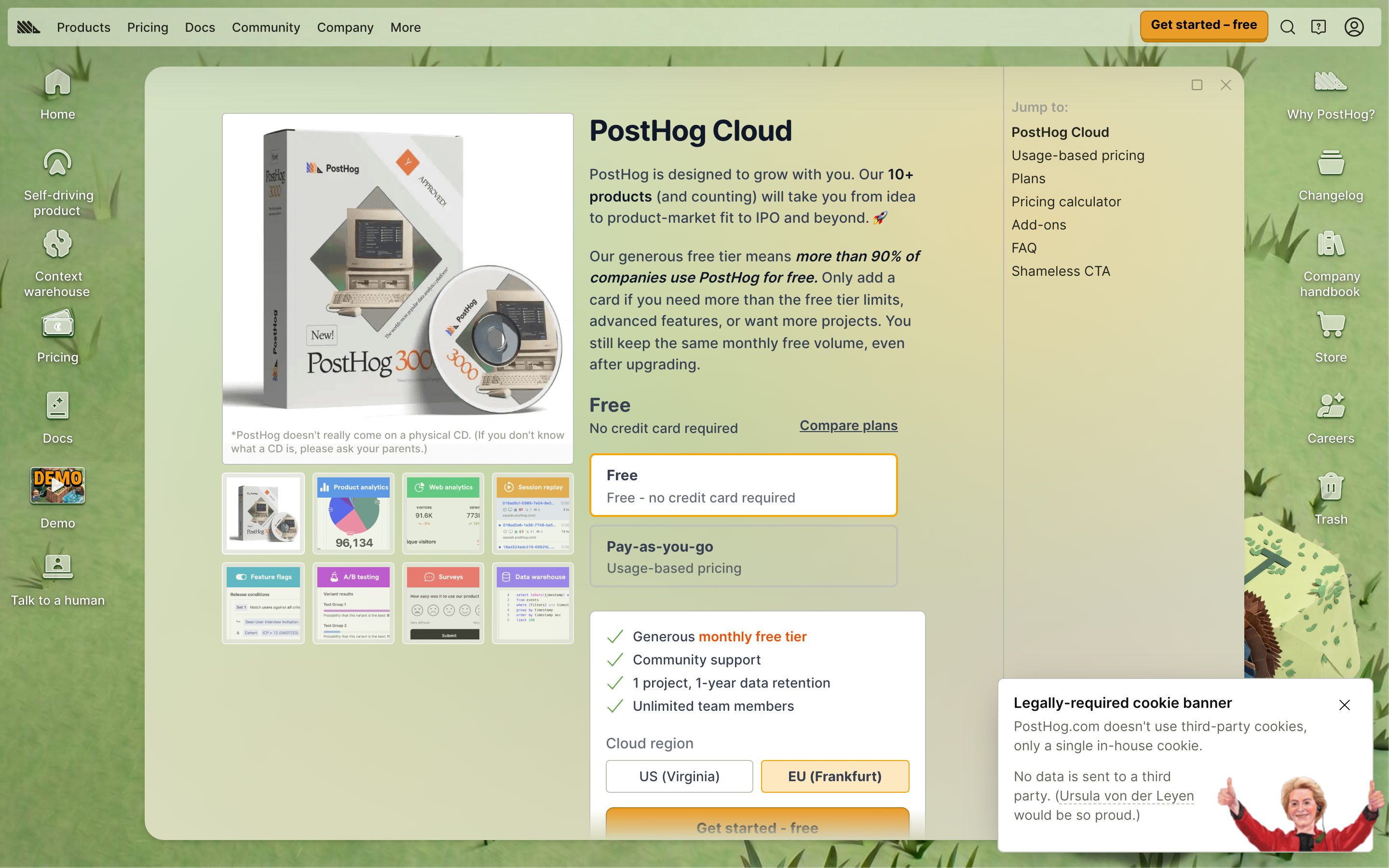
PostHog publishes what free actually buys, product by product: 1 million events a month for product analytics, 5,000 session recordings, 1 million feature flag requests, 1 million data warehouse rows, 100,000 error tracking exceptions. Under the plan name it says "Free - no credit card required". There's no 14-day clock anywhere on the page.
Then comes the sentence that does the quiet work: "You still keep the same monthly free volume, even after upgrading." That answers the fear sitting behind every free tier, which is that the day you add a card, the free allowance vanishes and you start paying from event one. PostHog says more than 90% of companies use it for free. Giving away that much only makes sense when usage grows into revenue on its own, which is exactly what a metered plan is built to do. A free tier this legible works like Notion's template gallery: the product does the acquisition, and the page just gets out of the way.
They price in public, down to five decimals
Every rate is published per unit and per volume band. Product analytics starts at $0.00005 an event, drops to $0.0000343 between 2 and 15 million, and lands at $0.000009 above 250 million. Session replay runs $0.005 a recording and falls to $0.0015 past 500,000. Surveys cost $0.10 a response, then $0.01 above 20,000.
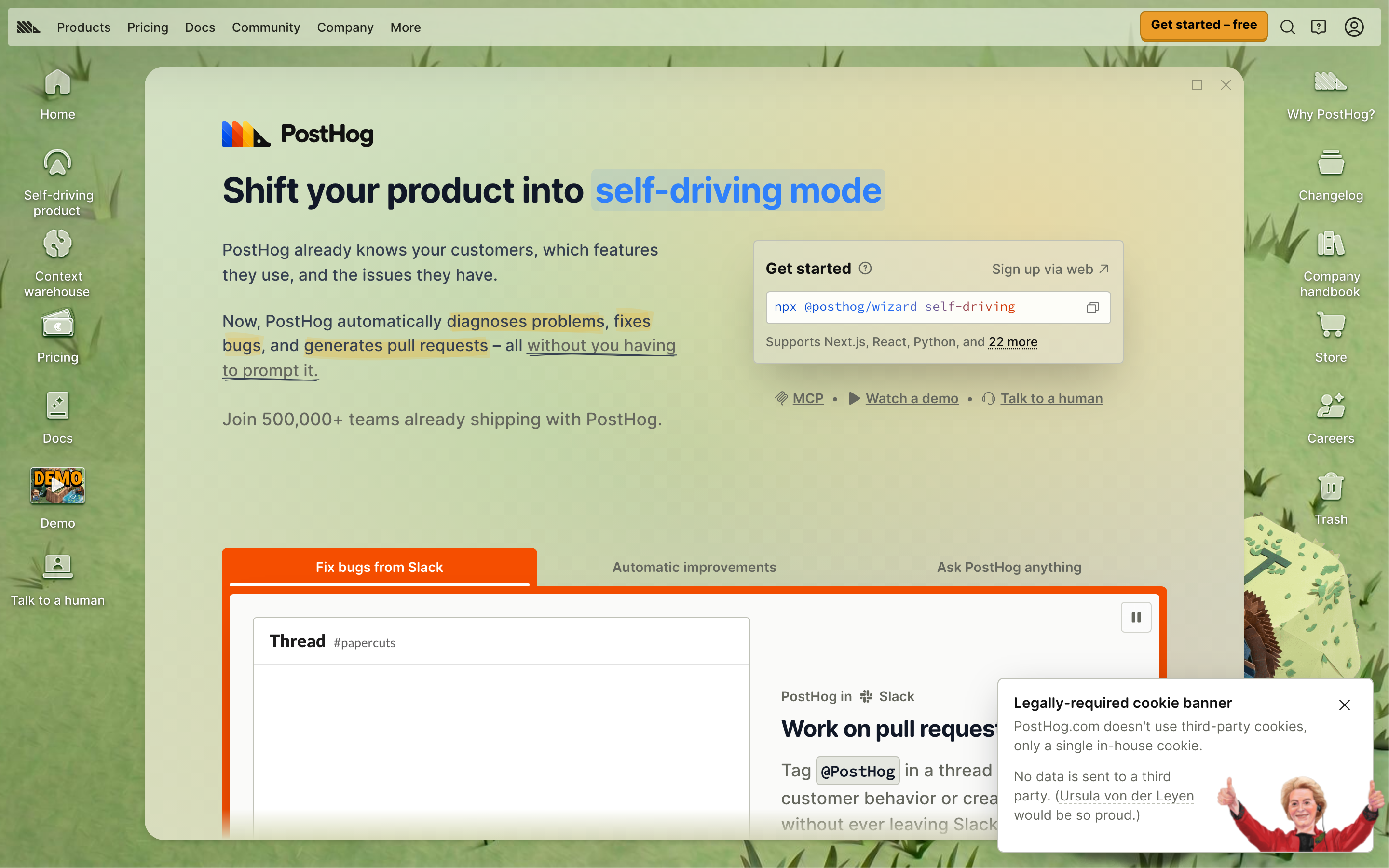
Published rates do a job a quote can't. A founder can model next year's bill in the tab they already have open, at 11pm, without talking to anyone. PostHog states the position outright on the homepage: "Our whole philosophy is that you shouldn't have to worry about pricing." Then it repeats the four headline rates on the homepage itself, so you meet the price before you ever reach /pricing.
The bill has a ceiling, and they say so on the page
Usage-based pricing has one failure mode that finance teams know by heart: the runaway invoice after a traffic spike. PostHog names it and defuses it in the same block of copy. "You can set a billing limit for each product so you never get an unexpected bill."
Read that as a copy decision. The objection lives in the pricing section, where the doubt actually forms, instead of waiting in an FAQ further down the page. The free plan carries its own version of the same logic: usage caps at the free limits, so a spike costs you nothing until you choose otherwise.
The sales call is the last option, and the label tells the truth
The homepage puts it flat: "You never have to 'jump on a quick call' with sales." The path to sales still exists. It sits in the nav, called Talk to a human, and it opens a plain form addressed to sales@posthog.com.
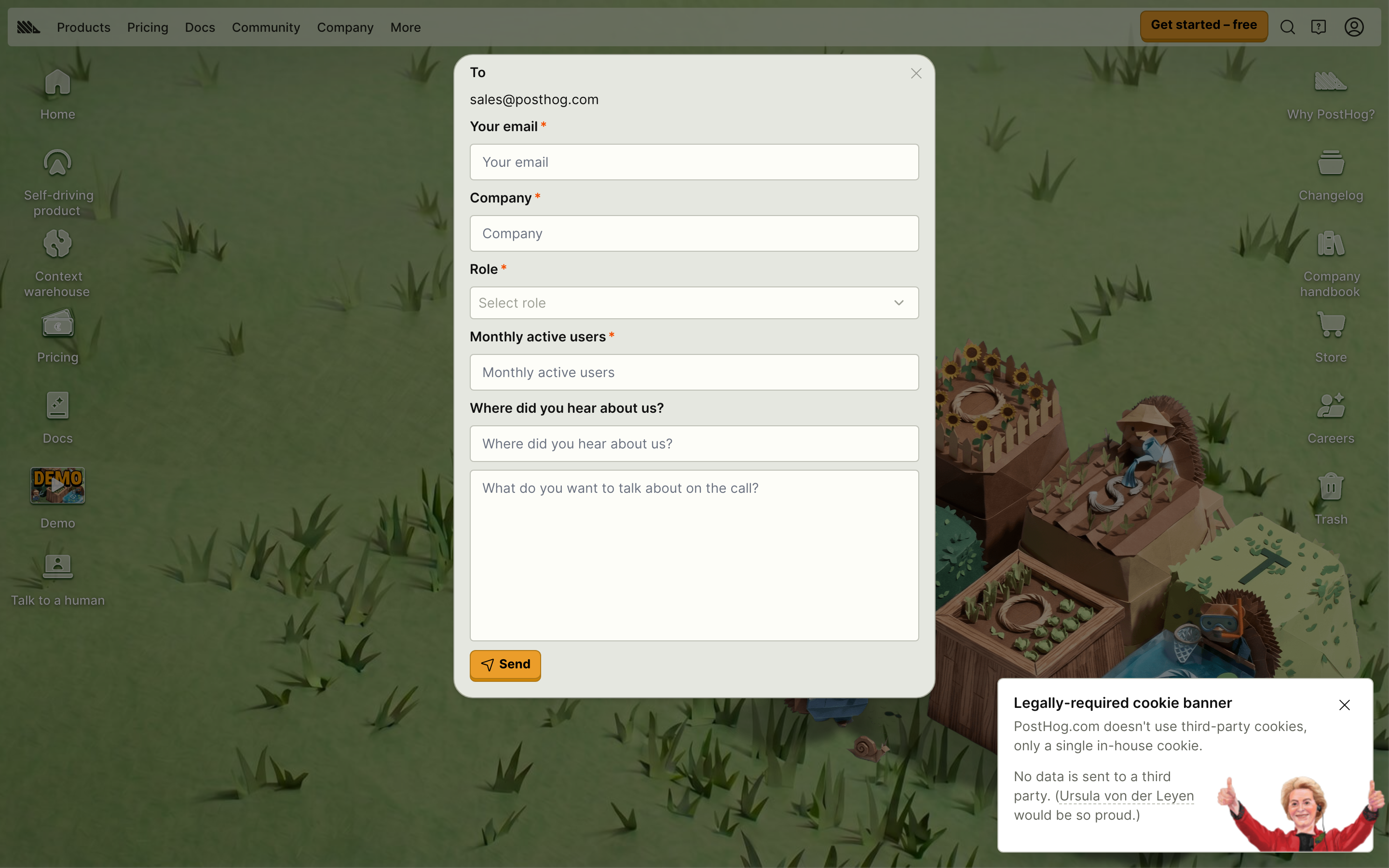
Two decisions are packed in there. The label describes what the reader gets, which lands better with an engineer who expects a pitch than "Contact sales" does. And the form asks for monthly active users up front, a required field, so the lead qualifies itself before anyone spends an hour on a call.
What to copy on your own self-serve pricing page
The hedgehog illustrations and the fake CD-ROM box are PostHog's alone. These four moves transfer to any pricing page:
- Publish the rate, not a range. One number per unit, and the volume bands underneath. "Starting from" makes the reader do arithmetic they can't finish.
- Give the free tier a size. "1 million events a month" tells a buyer whether they fit. "Free trial" tells them when the pressure starts.
- Answer the money fear where it forms. Billing caps, retained free volume, no card required, written into the pricing block itself.
- Make the sales call optional and honest. Say the reader never needs it, keep the door open anyway, and qualify in the form. The same discipline that makes Ramp's landing pages convert cold paid traffic applies here: one clear action, no hidden cost of clicking.
One thing we'd fix, on a page that lives on the credibility of its numbers: one fact shows up as two of them. The homepage says 98% of customers use PostHog for free. The pricing page says more than 90%. Both can be true at once, and neither is wrong, but a reader who sees both has to decide which one counts. Pick the figure, put it in one place, repeat it everywhere.
The lesson underneath all of it is cheaper than a pricing redesign. Every number PostHog publishes is a call it doesn't have to take. Work out which question your buyers keep booking a call to ask, then answer it on the page in a number.
If you want help turning your pricing page into the thing that closes, that's the kind of work we do.


