How Ramp's landing pages convert cold paid traffic
Ramp turns cold paid clicks into signups with a free plan, proof beside every claim, and one repeated CTA. Here's what to copy on your own landing pages.

Ramp turns a cold paid click into a signup by clearing every reason to stall before the form. Its landing pages lead with a free plan, stack proof right next to each claim, and point every button at the same action. If you buy traffic and watch it bounce, the fix is usually one of the three moves below. We pulled apart three live Ramp pages to show how they fit together.
A quick note on who's talking. vibhe runs growth and SEO for B2B and SaaS teams, and we have no relationship with Ramp. We picked it because its pages are a clean, public example of paid-conversion design you can study and borrow.
The offer does the qualifying
Ramp's pricing page opens with a plain promise: "Start for free. Scale with Intelligence." The Free plan sits at $0 per user, Plus at $15 per user plus a platform fee, and Enterprise at a custom quote. Three tiers change the reader's question. Instead of deciding yes or no on a purchase, they pick which plan fits, and the cheapest option costs nothing.
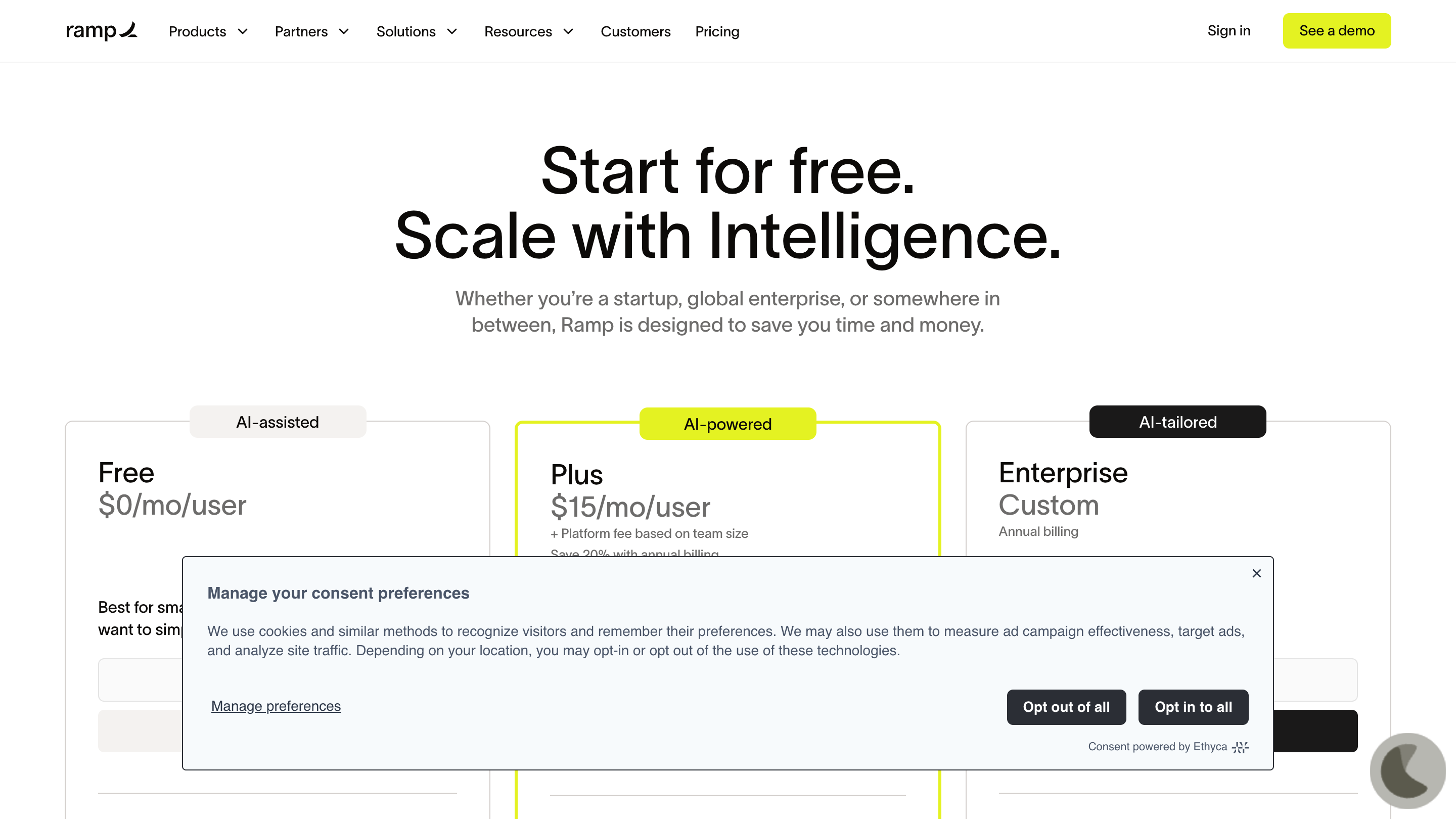
For paid traffic this matters more than it looks. Someone who clicked an ad has spent zero trust on you. A $0 entry point lets them say yes with their curiosity instead of their budget. The "Get started for free" button repeats on both the Free and Plus cards, and only Enterprise sends you to "Contact sales." One primary action, worded the same way twice.
Proof sits next to the claim
Ramp says 70,000 businesses use it, and names them: Notion, Shopify, Webflow, Eventbrite, Quora. The numbers are specific too. 27 million hours saved. Books closed 75% faster. Those figures sit near the top, beside the headline they support, and not in a testimonials block at the foot of the page. A specific number beats a superlative, because the reader can picture it. "Faster" is a word. "75% faster" is a claim you can test.
The lesson for your own page is simple. Put the proof beside the sentence it backs up. A logo strip under the hero does more work than a wall of quotes three scrolls down, where the skeptical paid visitor has already gone.
Every product page is its own landing page
Ramp runs ads against individual jobs, so each product page carries its own hero. The expense management page leads with "Reimagine expense management without the busywork," then hands you the same "Get started for free" button and the same kind of concrete proof: reimbursements in one to two business days, accounting integration in five minutes, and a named quote from Staci Robinson, an AP manager at Pair Eyewear.
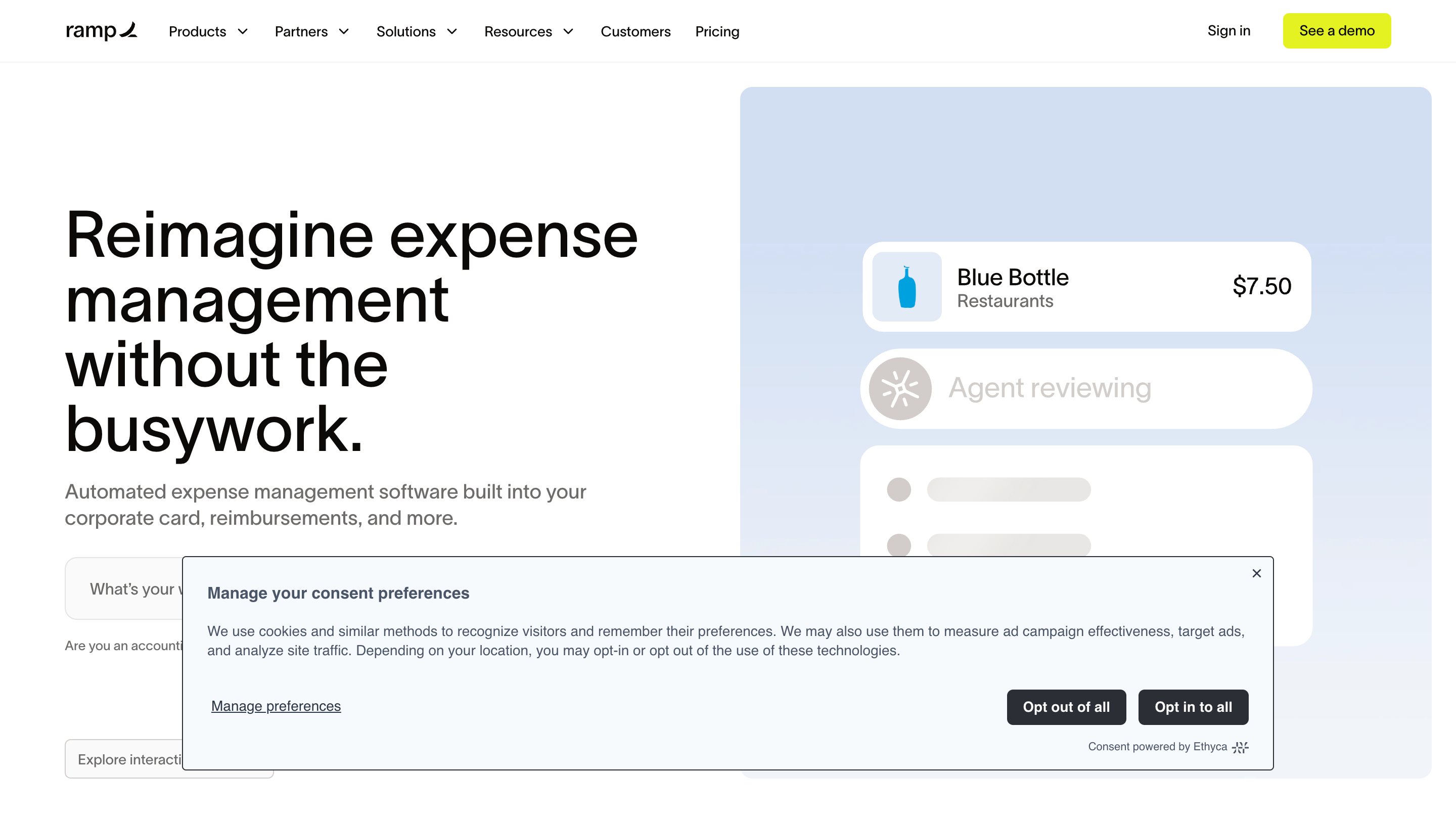
The pattern holds across the site. Outcome in the headline, one CTA, proof you can measure. A visitor who lands from an "expense software" ad reads a page about expenses, so the message matches the ad that sent them. That match is what keeps a paid click from bouncing. We covered the money side of this in when paid acquisition actually pays back.
What to copy on your own pages
Four moves transfer to almost any B2B or SaaS site. First, give paid traffic a low-friction entry: a free tier, a trial, a tool, something that costs the visitor nothing to try. Second, run one CTA and repeat it, rather than splitting attention across five. Third, move your strongest proof up next to the claim it supports, with real numbers and named customers. Fourth, build a dedicated page per ad theme so the headline answers the search that produced the click. Matching the page to intent is the same discipline that wins organic clicks, and paid just makes the cost of a mismatch immediate.
None of this needs Ramp's budget. The free plan, the proof placement, and the one-CTA rule are decisions, not line items. You can ship all three this week and read the difference in your signup rate.
If you want help turning a leaky paid funnel into pages that convert, that's the work we do at vibhe. Send us the campaign and the page, and we'll tell you where the drop-off is.


