Dub's SaaS affiliate program caps commissions at 12 months
Dub pays partners 30% for a year, gives new users 20% off, and bans brand bidding. What each choice does, and the number its own page gets wrong.

A SaaS affiliate program works when a partner can do the math in ten seconds and you can predict what each referral costs. Dub shows how: its own program pays 30% of each sale for one year, gives the referred customer 20% off for three months, and writes its rules where partners can read them. Here is what each of those choices does, and the one place the page contradicts itself.
Dub sells link attribution and affiliate software, and it runs its own affiliate program on that same product. So the program is a growth channel and a live demo at the same time. Both jobs show up on the page.
A commission with an end date
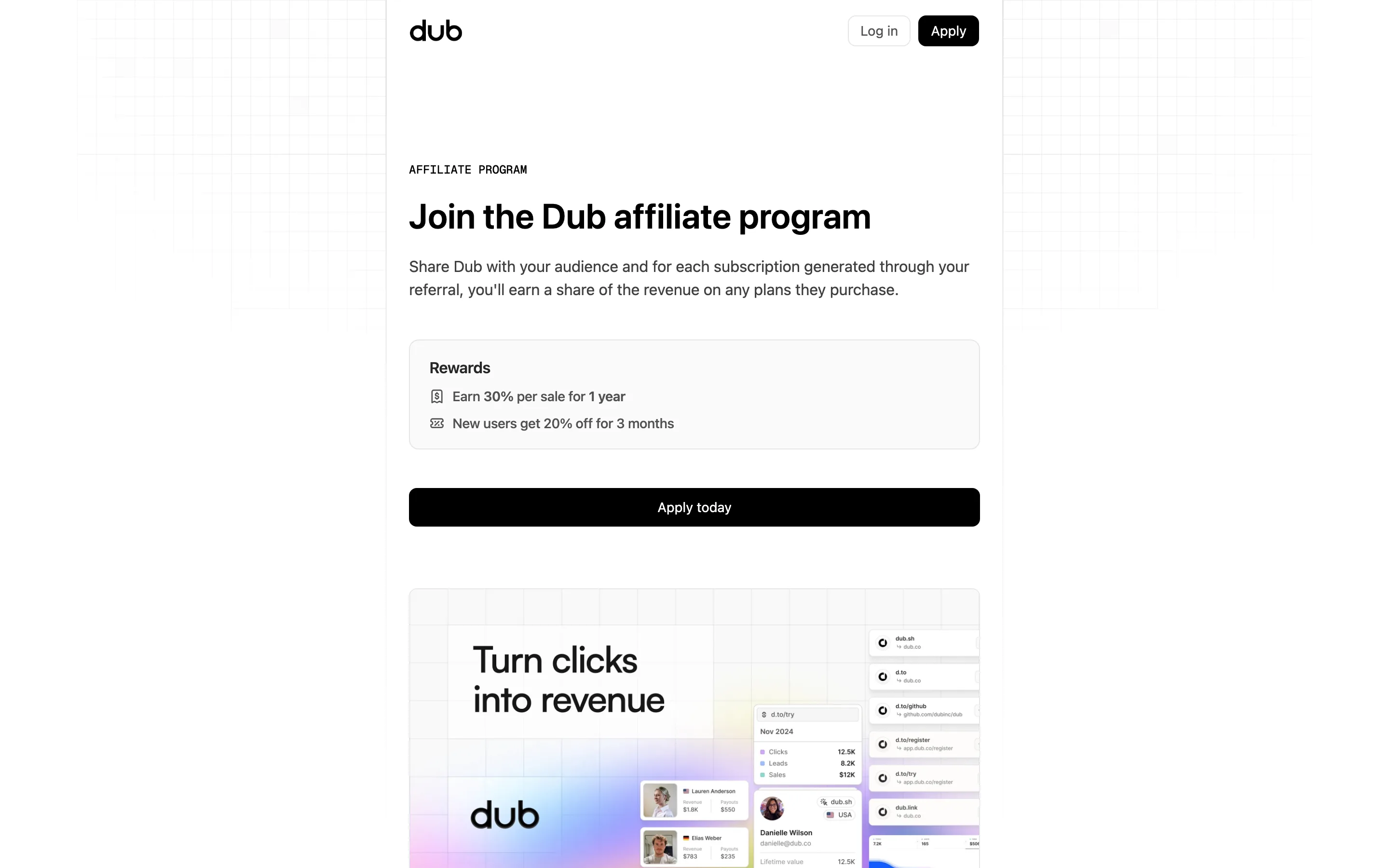
The offer fits in a box of two lines. Partners earn 30% per sale for one year. New users get 20% off for three months. Nothing else sits above the button.
The end date is the decision worth copying. Dub's own product page for Dub Partners lists "30% lifetime rev-share" as one of the reward structures its customers can pick. For its own program, Dub picked twelve months. A lifetime commission is an open liability on every customer a partner ever sends. A twelve-month one gives finance a number.
Run it on list prices. Dub's Advanced plan costs $300 a month. Thirty percent of that is $90 a month, or $1,080 over the year. The new customer's discount is $60 a month for three months, so $180. That puts the cost of one referral at about $1,260 against $3,600 of list price in year one, and nothing from month thirteen on. That's our arithmetic on public prices, since Dub doesn't publish its own, but it's the sum any team should write down before choosing a rate.
An earnings calculator set to the plan that pays
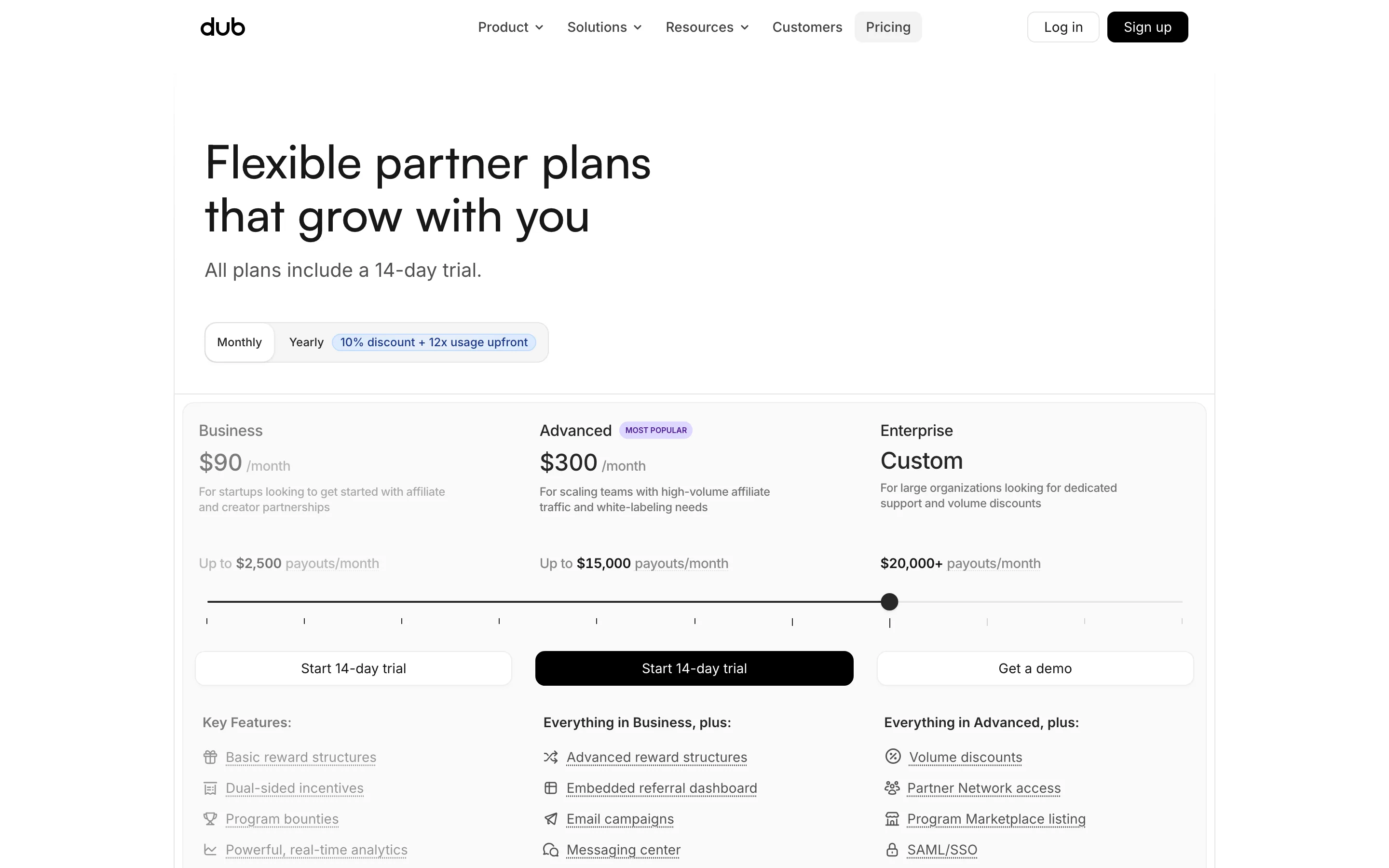
Further down, an earnings calculator shows "$900/month" for "10 customer sales". Move the slider and the figure moves with it. The page data behind it sets the product price at $300, the Advanced plan, the one the pricing page tags "Most popular".
That default does two things. It turns a percentage into a monthly income a creator can picture. And it anchors the partner on the plan Dub most wants to sell, so they pitch the $300 tier instead of the $90 one. A calculator on your own program page should start from your most common paid plan.
The rules that keep the affiliate channel honest
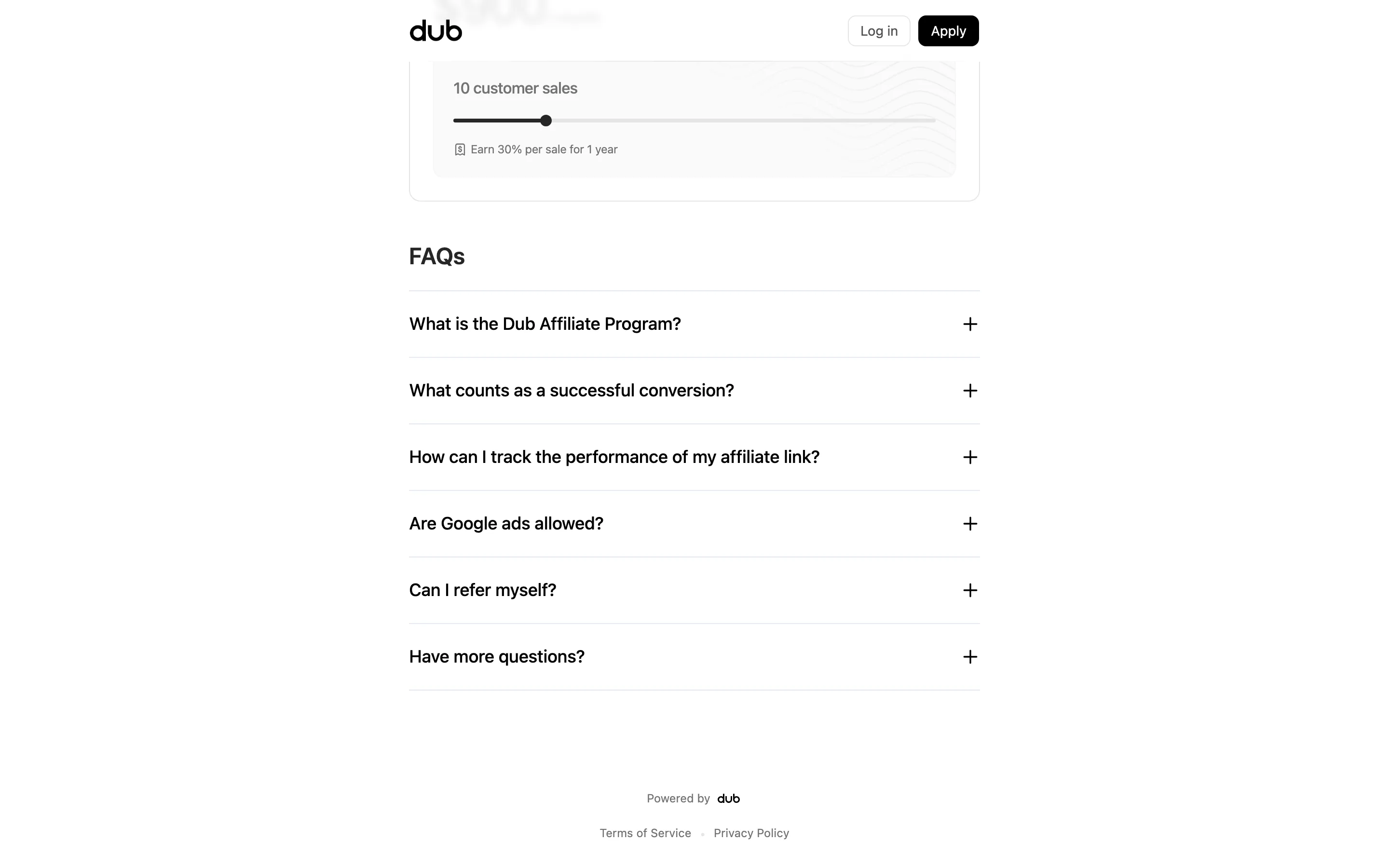
The FAQ answers the questions that decide whether an affiliate channel adds customers or only re-labels ones you already had.
- Search ads are banned. "Running ads on Google, or other search engine platforms is against our partner terms." Without this, a partner can bid on "dub" and collect 30% on people who were already typing your name.
- Self-referrals are banned. The FAQ says the program "is not a way for you to get a discount on your own account."
- The window is 90 days, last click. A customer counts if they start a paid plan within 90 days of clicking, and the partner's link has to be the last one clicked before signup.
- Disclosure is required. Partners must make the paid relationship obvious, with a link to the FTC's guidance.
Each rule closes one way to get paid without bringing a new customer. If you've already read how Clay turns agencies into a growth channel, this is the same idea at a smaller scale: decide who gets credit before the first payout.
Where the page contradicts itself
The first FAQ answer says partners "earn a 20% commission on their subscription for up to 12 months." The rewards box above it, the calculator, and Dub's April 2025 launch post all say 30%. A partner deciding whether to apply now has two numbers for the one thing they care about.
This is the most common way program pages go stale. The rate changes in one place and the copy written around it stays behind. The fix is cheap: keep the commission, the window and the discount in one source, and have every block on the page read from it. If your page is built in a CMS, make the rate a field that every block reads.
The program page sells the product too
Halfway down, the affiliate page lists what Dub Partners does: reward structures, payouts, fraud detection, dual-sided incentives, an embedded referral dashboard. A creator who came to earn commissions leaves knowing what the product is, which is what they need to pitch it well. Some of them run companies that could use it.
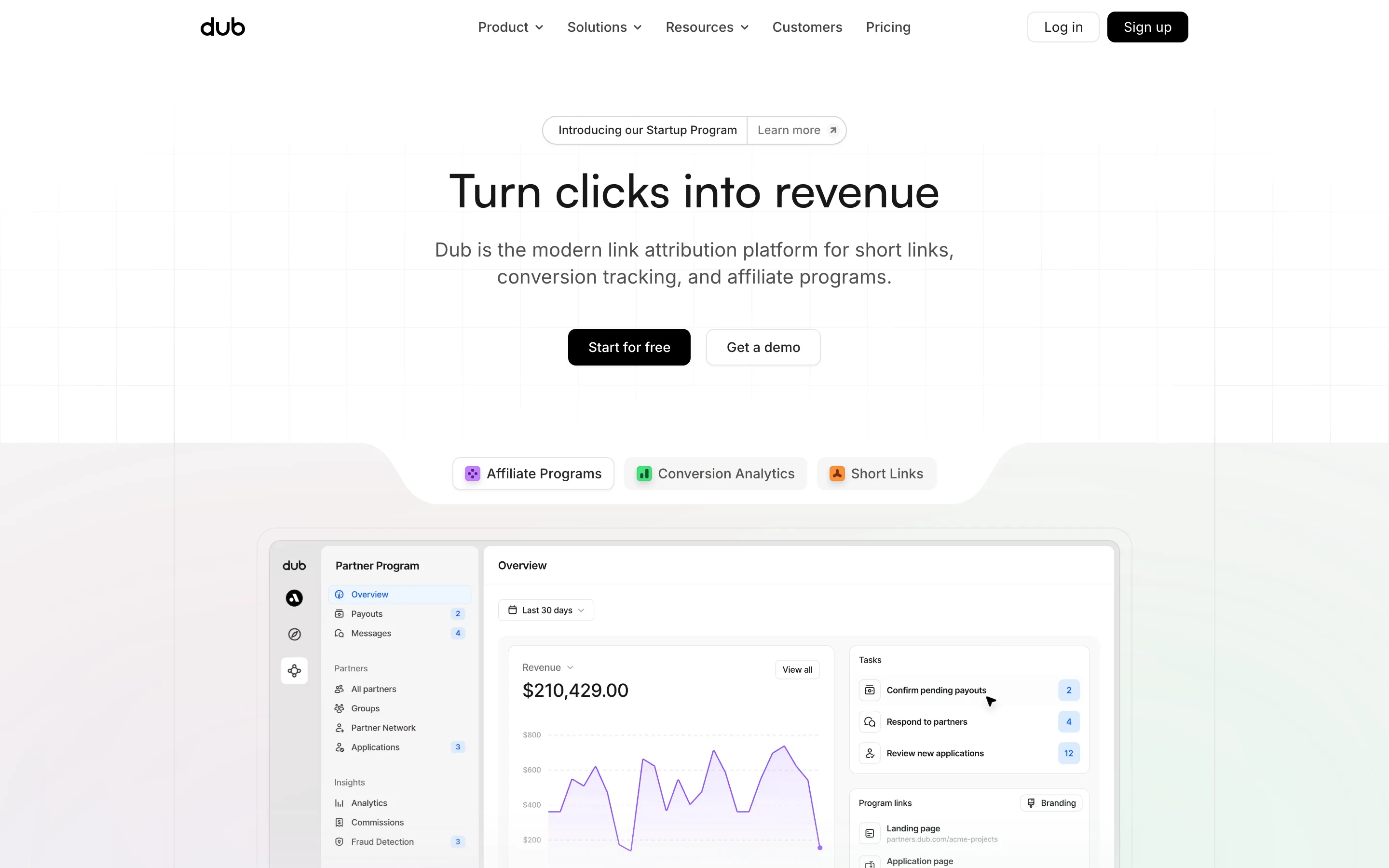
You don't need to sell affiliate software to borrow this. Your program page is read by people who are about to explain your product to their audience. Give them the two sentences you'd want them to say.
What to copy for your own SaaS affiliate program
- Put the whole offer in two lines: what the partner earns, for how long, and what the new customer gets.
- Cap the commission in months, and work out the cost per referral on your most popular plan before you launch.
- Default any calculator to that plan.
- Ban bidding on your brand name and self-referrals, and say so in the FAQ.
- State the attribution window and model in one sentence.
- Keep every number in one place so the page can't disagree with itself.
Before you pick a rate, size the channel like any other test: how much budget you need to test a paid channel applies to commissions too.
If you want help setting the numbers and rules for a referral or affiliate program, that's what we do.