Google-GeminiNotebook: update your bot rules before August
Google renamed the NotebookLM fetcher to Google-GeminiNotebook. The old string stops working in August, and every rule or log filter keyed to it goes blind.

Google renamed the fetcher behind NotebookLM. The user agent token Google-NotebookLM is now Google-GeminiNotebook, and Google's own documentation says the old name is supported only until August 2026. If you block, allow, or count that bot anywhere, rename the string this week.
The rename followed the product. On 16 July Google turned NotebookLM into Gemini Notebook, part of a wider move to put everything under the Gemini name (TechCrunch). A day later the crawler docs picked up the new token, and Search Engine Journal flagged what it means for site owners on 18 July.
What the Google-GeminiNotebook user agent actually does
It's a user-triggered fetcher, so it isn't crawling you on a schedule. It fires when a person asks Gemini Notebook for something. The Discover Sources feature takes a topic, pulls up to ten pages that match it, and turns them into a summary the user reads inside the notebook.
Three properties matter for how you treat it.
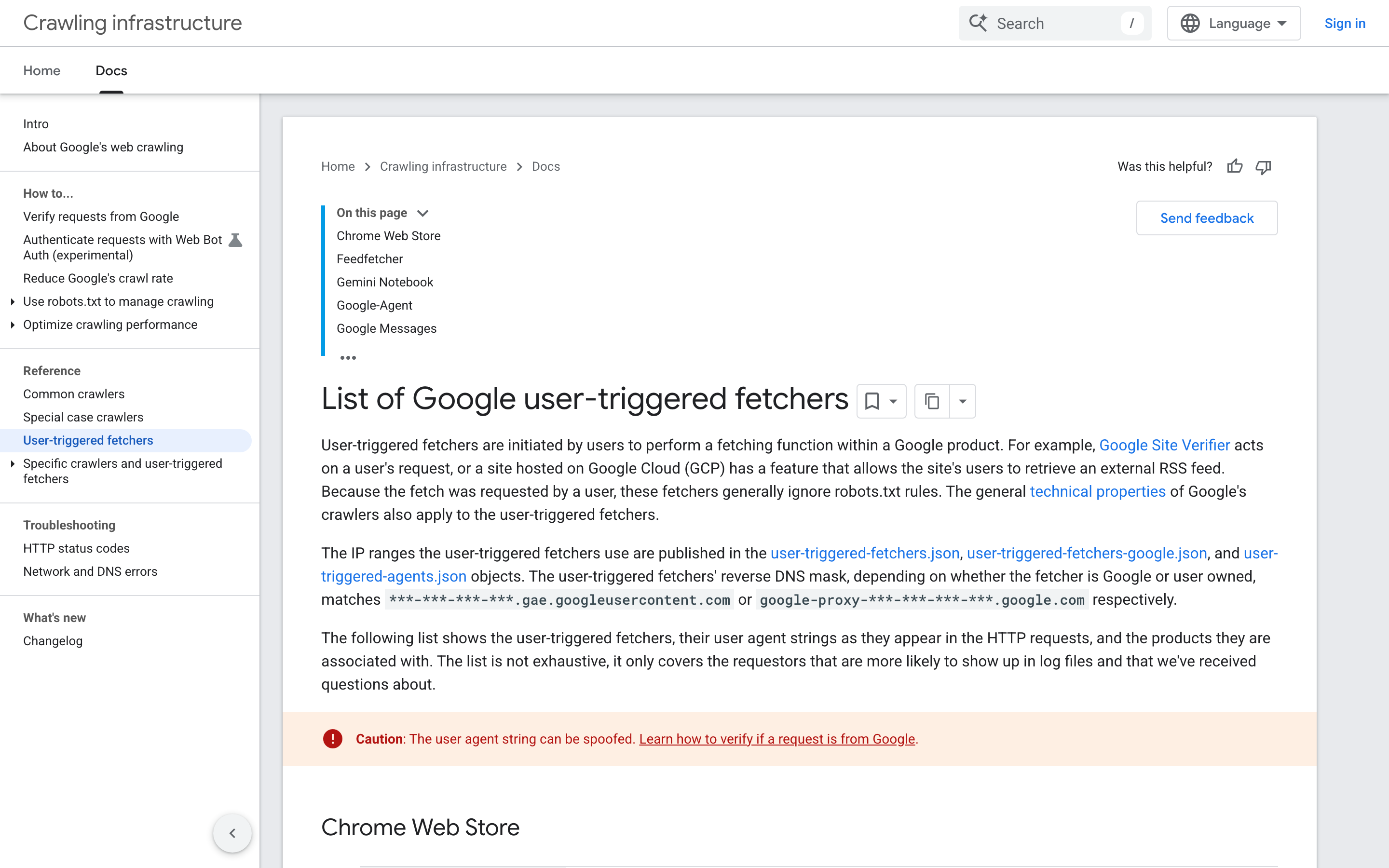
It ignores robots.txt. Google's user-triggered fetchers page says these agents "generally ignore robots.txt rules", because a person asked for the fetch rather than a bot deciding on its own. A Disallow line won't stop it.
It sends no referral. The reader stays in the notebook. Nothing lands in GA4, Plausible, or whatever else you run on the page.
It has nothing to do with your Google rankings. Googlebot is a separate agent with separate rules. Blocking Gemini Notebook doesn't touch how Search crawls or indexes you.
Why this is a measurement problem before it's a firewall problem
A bot that sends no referral only exists in one place: your server logs. Or your CDN logs, if Cloudflare or Fastly sits in front. Analytics can't see it, because analytics needs a browser to load a tag and a human to arrive.
So the log line is the whole record. And the log line changes name in August.
That's the part teams miss. Anyone who built a rule, a filter, or a dashboard row around Google-NotebookLM keeps a working setup for a few more weeks, then quietly stops seeing anything. The traffic won't drop. Your view of it will. This is the same failure mode we wrote about when AI referral traffic collapsed into one channel: the measurement broke before the behaviour did.
The three places the old string is hiding
Start with a grep. On most stacks this takes two minutes:
grep -ri "notebooklm" /etc/nginx/ .htaccess robots.txtThen check the places grep can't reach.
Edge rules. Cloudflare WAF expressions, Fastly VCL, AWS WAF string matches. These live in a console, not in your repo, so they survive every deploy and nobody reviews them.
Log analysis. Bot exclusion lists in GoAccess, Screaming Frog Log File Analyser, Botify, or a hand-rolled BigQuery query. If a filter drops the old string, the new one starts counting as human traffic and inflates your numbers.
Internal dashboards. Any "AI crawler hits" chart someone built in the last year. Those are almost always a list of literal strings.
Add Google-GeminiNotebook everywhere you find the old name, and keep both until September. Google says the old agent works until August, and a few weeks of overlap costs nothing.
Block it or count it
We'd count it. Blocking protects nothing on the Search side, since Googlebot is a different agent, and it removes you from a surface people use to research decisions. Someone building a notebook on "B2B onboarding benchmarks" is doing exactly the work that ends in a shortlist.
The trade is real, though, and it's yours to make. You get cited inside a product with no click back, no session, no email capture. If your content is the product, that reads as a straight loss. If your content is how buyers find you, ten fetches a week from a research surface is a signal worth having.
Either way, make the call on purpose. Reflex blocking of every AI agent is a decision too, taken by whoever last edited the WAF.
What to track once the string is right
Pull a weekly count of hits by AI user agent from your logs, split by URL. You'll learn which pages get picked up as sources and which never do. Pages that show up often are doing the explaining job well, and they're the ones worth keeping current.
Pair that with the AI numbers Google does hand you. The Search Console AI performance report covers AI Overviews and AI Mode inside Search. Your logs cover the fetchers. Neither one is the full picture, and together they beat guessing.
If you want help turning your server logs into a view of AI demand you can act on, that's the kind of work we do.


