How Supabase's comparison pages win bottom-funnel search
Supabase built a comparison page for every rival it sells against. Here is how those bottom-funnel pages catch buyers who are ready to pick a tool.

Someone who types supabase vs firebase or firebase alternative into Google is close to a decision. They have a shortlist. They want one page that lines the two tools up and helps them pick. Supabase built that page, and a whole set of them, to catch that exact moment. Their comparison pages are one of the clearest bottom-funnel SEO plays a B2B or SaaS team can copy.
We pulled apart Supabase's comparison pages to see how they work. Here is what they do, and what you can lift for your own site.
Why comparison pages sit at the bottom of the funnel
Search intent climbs as the words get more specific. "Backend platform" is someone browsing. "Firebase alternative" is someone with a problem and a budget. "Supabase vs Firebase" is someone with two tabs open, ready to choose. That last query is worth more than a pile of top-of-funnel visits, because the reader is one good answer away from signing up.
Supabase parks a page on each of those high-intent queries. The URL pattern tells the whole story: /alternatives/supabase-vs-firebase, /alternatives/supabase-vs-auth0, /alternatives/supabase-vs-heroku-postgres. One page per rival, each aimed at the search a buyer runs the day before they commit. If you sell against a named incumbent, you want to own the page that shows up when people compare you to it.
One template, repeated for every rival
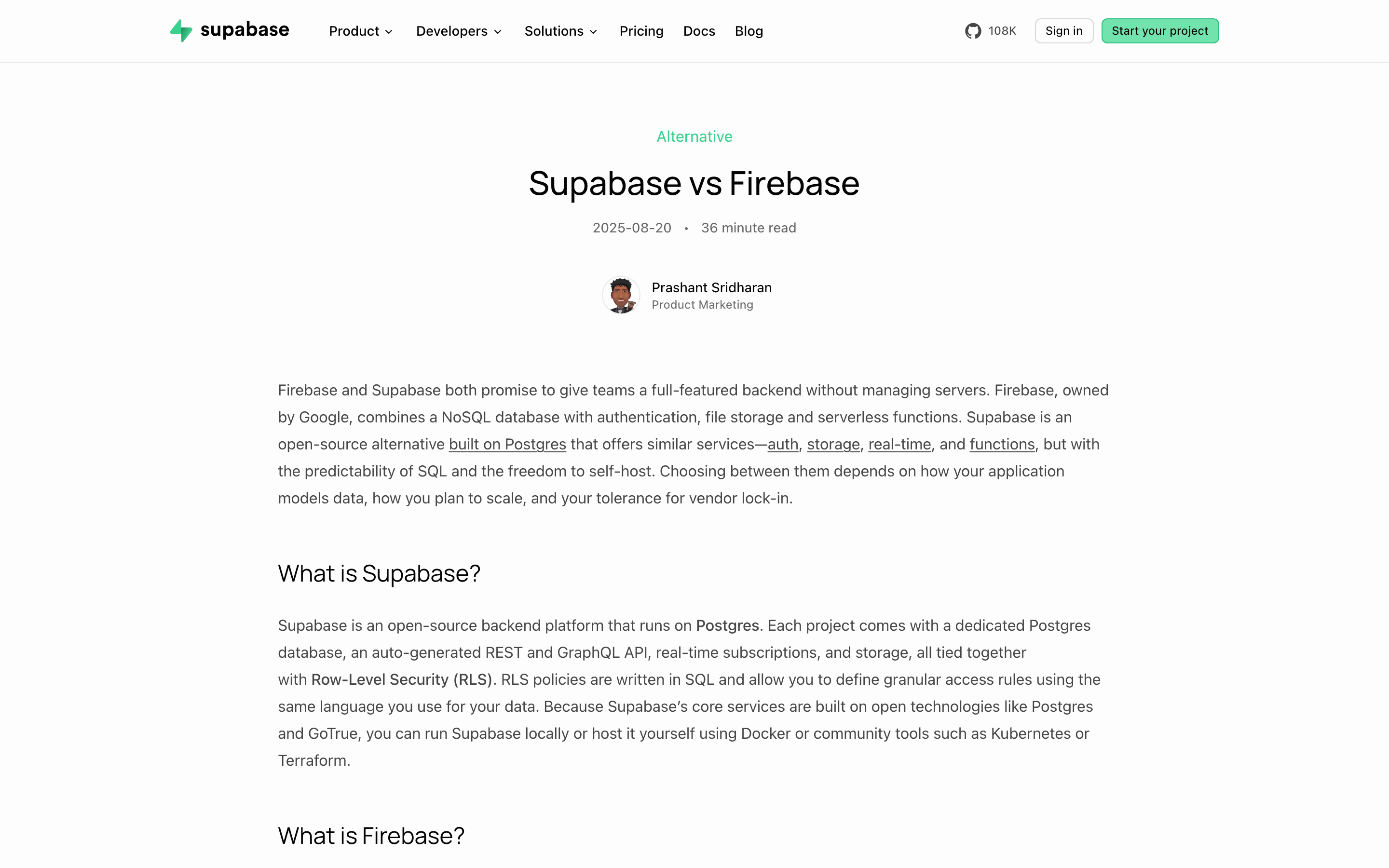
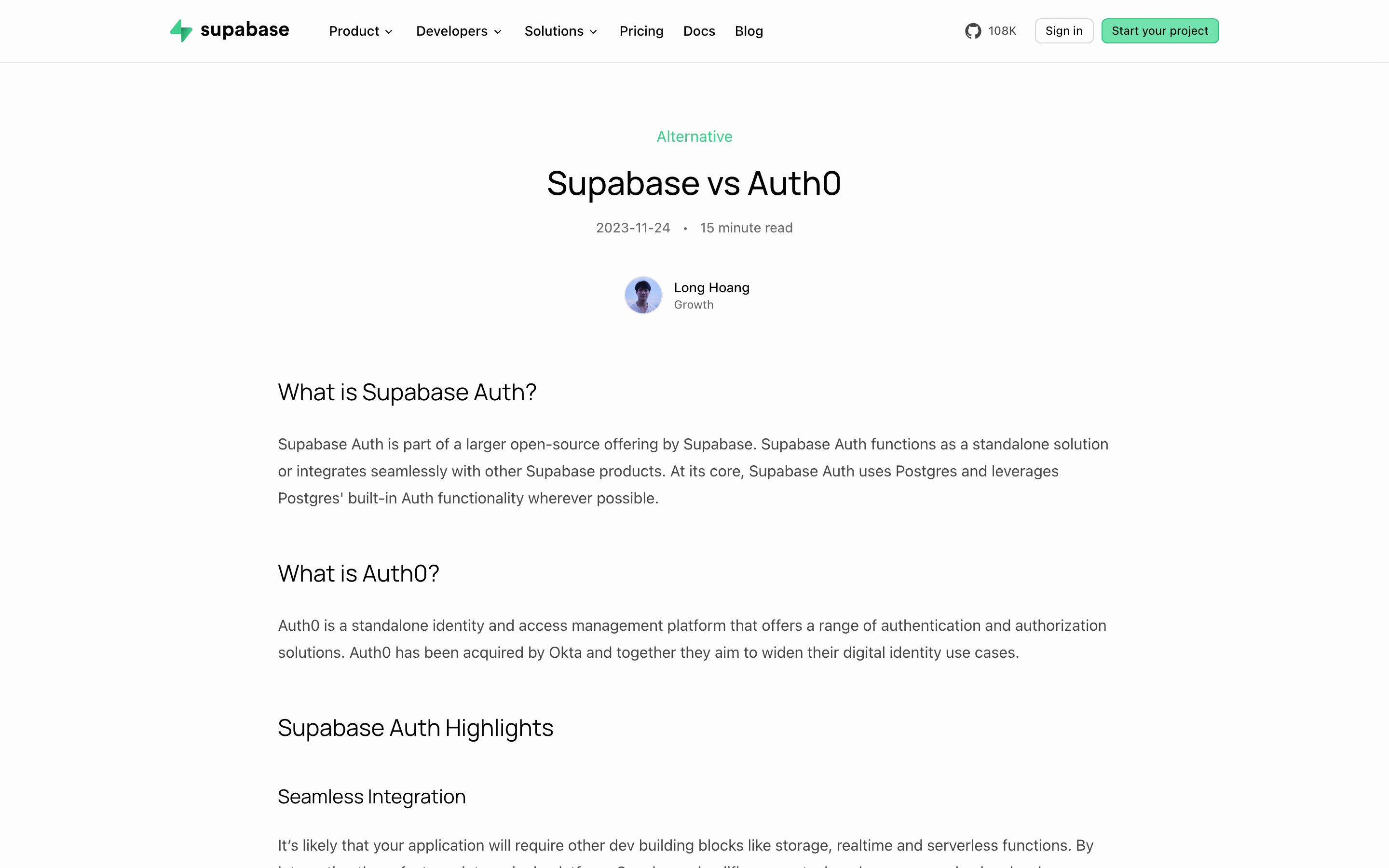
The pages share a skeleton. An "Alternative" label up top. A plain "Supabase vs Firebase" headline. A date, a reading time, and a named author with a role. Then the body runs the same beats every time: what Supabase is, what the other tool is, a feature-by-feature table for the database, auth, functions, storage and pricing, a section on migrating over, and a call to action at the end.
The Firebase page is a 36-minute read published in August 2025. The Auth0 page runs 15 minutes. Same shape, different depth, sized to the rival. Once the template exists, adding the next competitor is a fill-in-the-blanks job, not a blank page. That is how one page becomes a library.
They answer the query in the first two sentences
Read the top of the Firebase page and you get the answer before you scroll. The opening explains that both tools give you a backend without managing servers, that Firebase is Google's NoSQL option, and that Supabase is the open-source Postgres one. Two sentences, and the reader knows the real difference.
That matters twice over. Google pulls answer-first paragraphs into featured snippets, and AI Overviews and ChatGPT quote the pages that state a claim cleanly. A comparison page that buries the verdict under 2,000 words of warm-up loses both. Supabase leads with the point, then backs it up.
What you can copy this week
Start with your three most common "vs" and "alternative to" searches. You already know them: they come up on sales calls and in the queries that hit your site. Write one honest page per rival. Open with a two-sentence answer. Build a real feature table with specifics in the cells. Add a section for people switching, because that is the hardest part of changing tools and the place a fair guide earns trust.
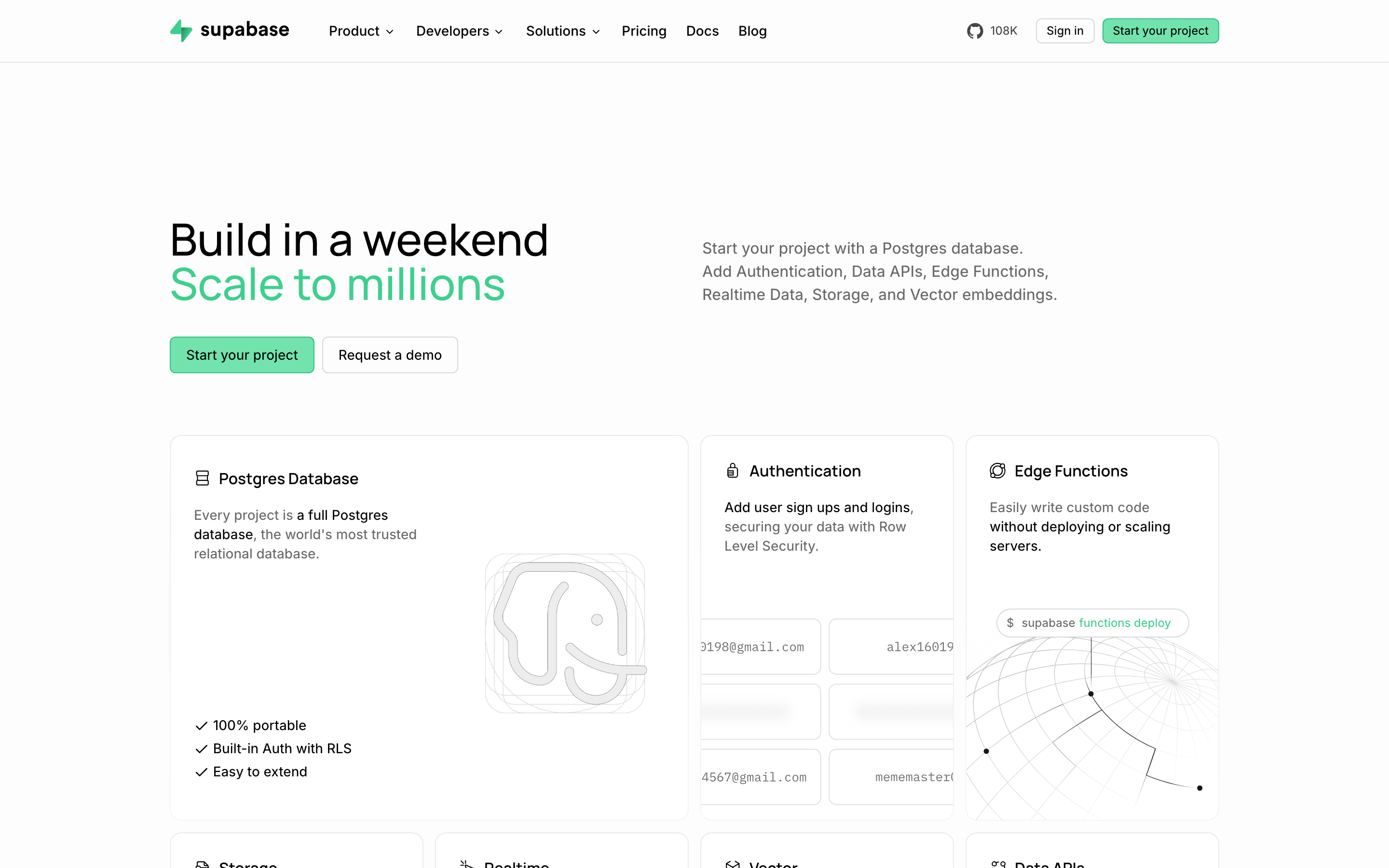
Fair is the word that carries the whole tactic. Supabase's pages credit what Firebase and Auth0 do well before making their own case. A comparison page that only dunks reads like an ad and converts like one. Name where the other tool wins, then show where you win. And end every page on one clear next step, the way Supabase funnels each comparison to a single "Start your project" button.
These pages work because they match a buyer's question to a page built to answer it, the same discipline behind matching every page to search intent. It is the same engine logic we broke down in how Stripe turns its docs into an SEO engine: pick the query, build the one page that deserves to rank, then do it again.
If you want help finding the comparison queries worth a page and turning them into a plan, that is the kind of work we do at vibhe.


