How Stripe turns its documentation into an SEO engine
Stripe's docs pull an estimated two million organic visits a month. Here is how they structure pages to rank, and four moves you can copy this week.

Stripe's documentation ranks because every page answers one question, lives at its own clean URL, and points to the next step a developer needs. That pattern, repeated across thousands of pages, is why docs.stripe.com carries so much of the company's organic search. By third-party estimates, Stripe draws around two million organic visits a month across roughly 23,000 keywords, and the docs do a lot of that work.
Most companies treat documentation as a cost center, a place customers go after they buy. Stripe treats it as the front door. If you sell to developers, or to anyone who searches for how to do one specific task, docs-led SEO is the channel sitting in plain sight. Here is what Stripe does, page by page, and what you can copy without a big team.
One page, one question: the core of docs-led SEO
Search a task like "accept a payment" or "cancel a subscription" and Stripe has a page built for exactly that. The H1 matches the task. The first paragraph gives the short answer. The steps follow. No preamble about the company, no marketing detour, just the thing you came for.
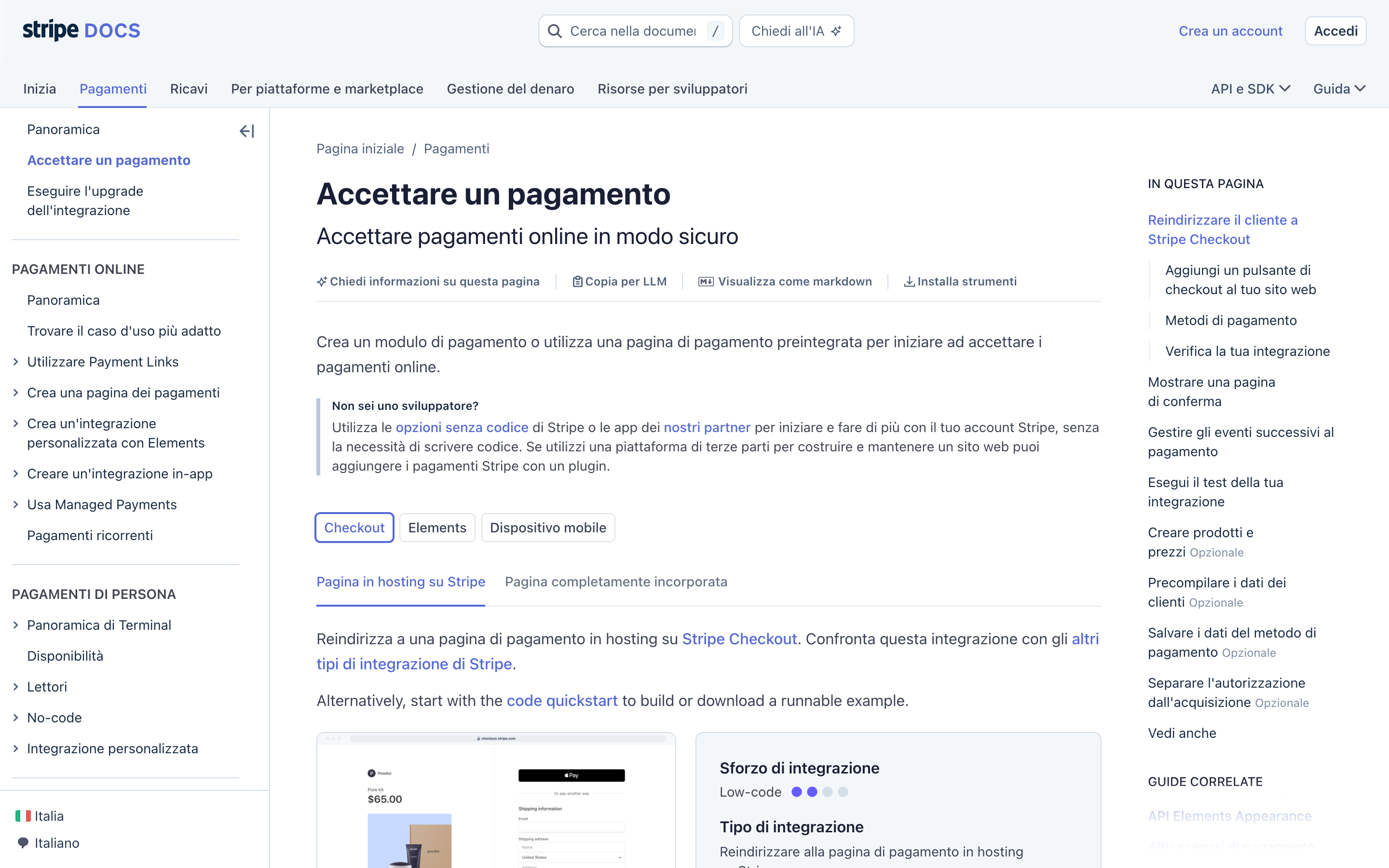
This is the same reason featured snippets and AI answers pick these pages up: they resolve the query in the first few lines. When you write a doc, name the task in the heading and answer it in sentence one. A reader who bounces right after that line should still leave with what they came for. Do that across a whole library and you own a long tail of "how do I" searches that competitors never bother to write for.
Every page has one clean, permanent URL
Stripe's API reference gives each endpoint its own address, in a pattern anyone can read: /docs/api/charges/create, /docs/api/refunds/create, and so on down the list. One concept, one URL, one H1. Nothing competes with itself, so Google never has to guess which of five near-identical pages deserves the ranking.
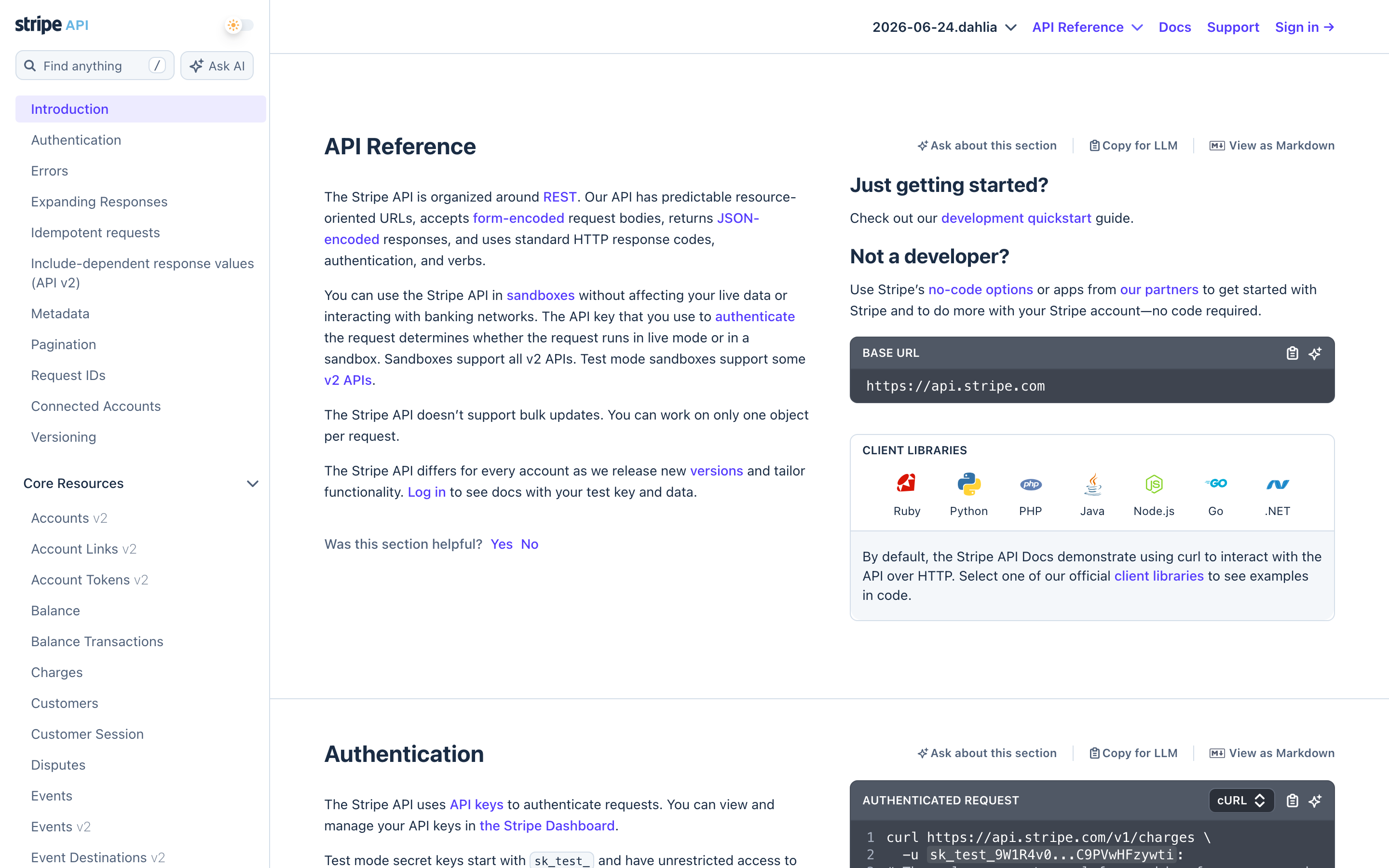
The layout in that screenshot does a second job. Navigation sits on the left, the explanation runs down the middle, runnable code stays on the right, all kept in sync. A developer copies the snippet and leaves satisfied, which shows up later as return visits and citations. And because the pages are genuinely useful, real sites link to them on their own. One reference from a Shopify or a widely shared tutorial passes more authority than thousands of the low-quality backlinks most teams waste months chasing.
The structure teaches Google the map
The docs home is organized by what people are trying to do: collect payments, bill on a schedule, run a marketplace, move money. Each hub links down to its guides, each guide links to the API pages it uses, and related pages link across to each other.
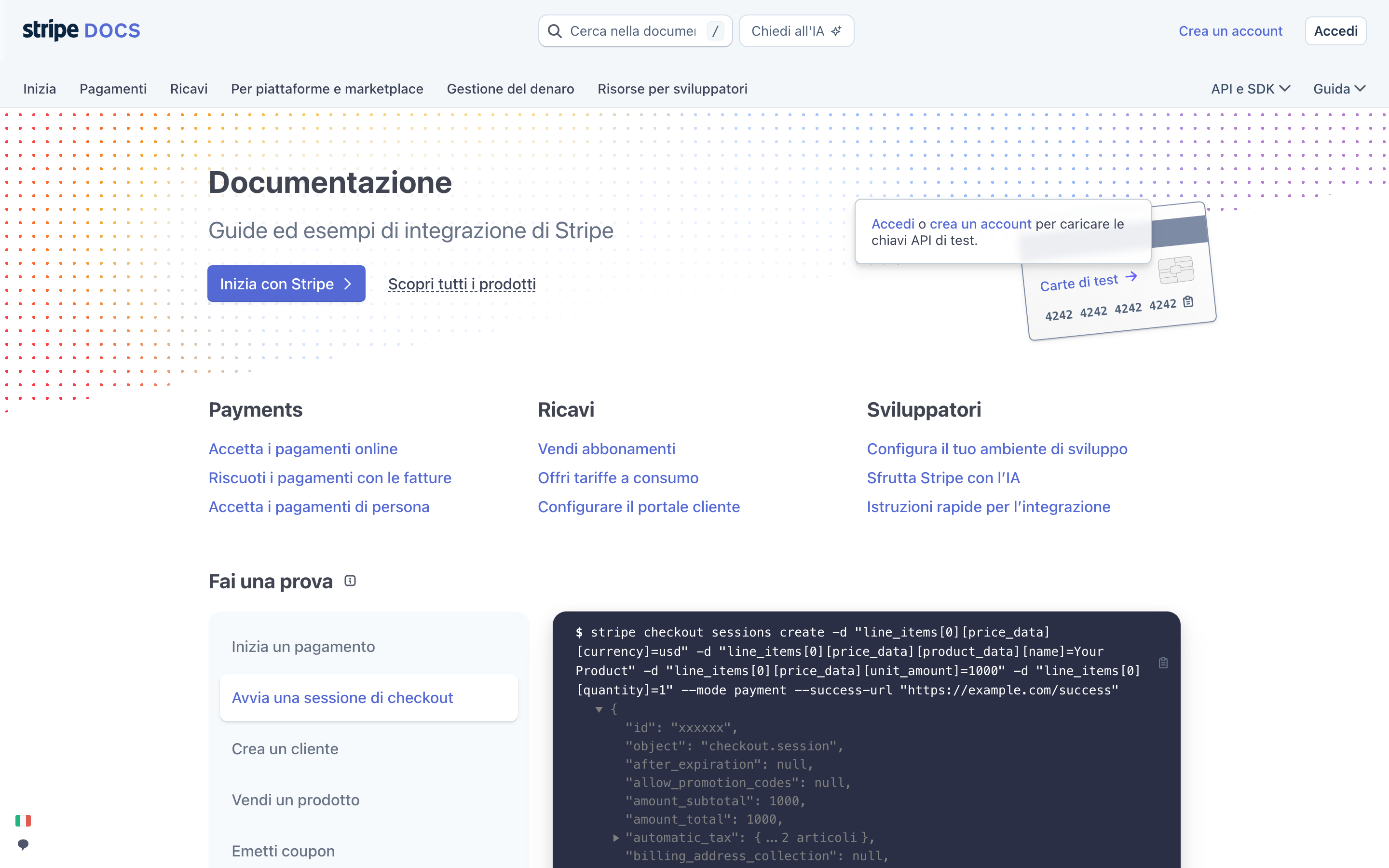
That internal linking is the part most teams skip. It tells search engines how your pages relate, and it passes ranking strength to the ones that matter most. It is the same logic behind a good topic cluster: a hub page, supporting pages, and links that tie them into one clear shape a crawler can follow.
Stripe now writes for machines too
Add .md to almost any Stripe docs URL and you get a clean markdown version of the page. Stripe ships these on purpose. LLM-based search, IDE assistants, and coding agents read the plain-text version to figure out how to call the API, and the markdown hands them the content without the interface wrapped around it. A growing slice of docs traffic is not a person at all.
You do not need Stripe's engineering budget to borrow the idea. Keep your important pages fast, give them clean HTML, and make the core answer readable without scripts running first. The same habits that help a crawler read you help an AI model quote you, and being the quoted source is the new front page.
What to copy this week
Four moves, in order of effort. Give each real task its own page with a task-shaped heading. Answer the query in the first two sentences, before anything else. Put every page at a stable, readable URL, and never split one topic across near-duplicates. Then link your pages to each other so the strong ones lift the rest. Stripe scaled this to thousands of pages, but the pattern earns its keep at ten. It is the same discipline that lets Zapier run programmatic SEO across a far larger library, and it works just as well on a modest help center.
If you want help turning your docs or help center into pages that actually rank, that is the kind of work we do at vibhe. Tell us what you are trying to get found for, and we will map the pages to get you there.


