

Analytics
Google preannounced the December 2026 core update. Use the gap to read November cleanly, take a baseline, and hold big site changes until it ends.
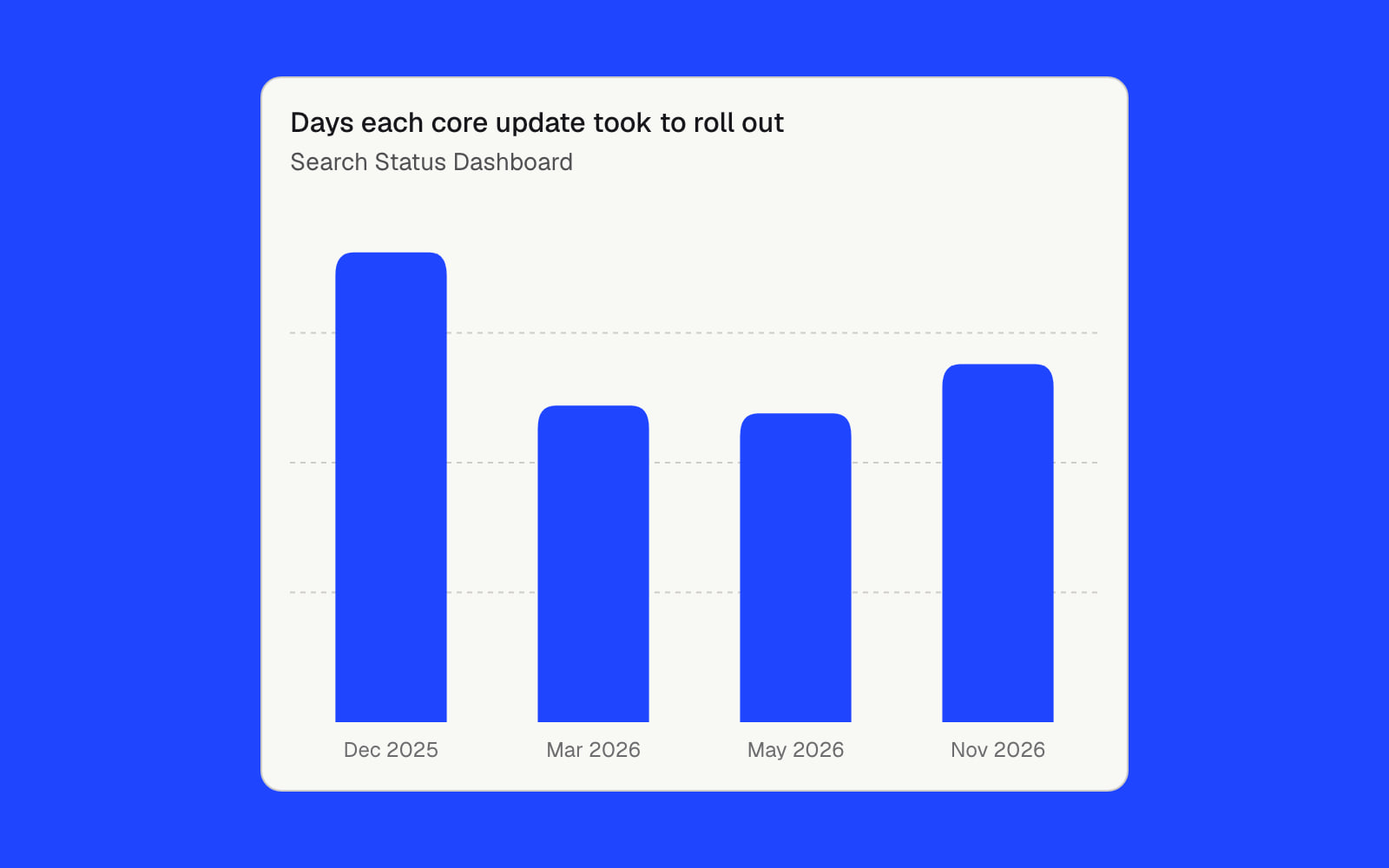
Google has preannounced the December 2026 core update, the first time it has named a core update before the rollout began. The Search Status Dashboard entry, posted on 24 November, says only that it "is scheduled to be released in December 2026." That warning is worth more than it looks: the November core update has just finished, and you now have a short, known window to judge it before December's moves land on top of it.
So the job this week is measurement. Read November cleanly, take a baseline for December, and keep your own changes out of the way while Google's run.
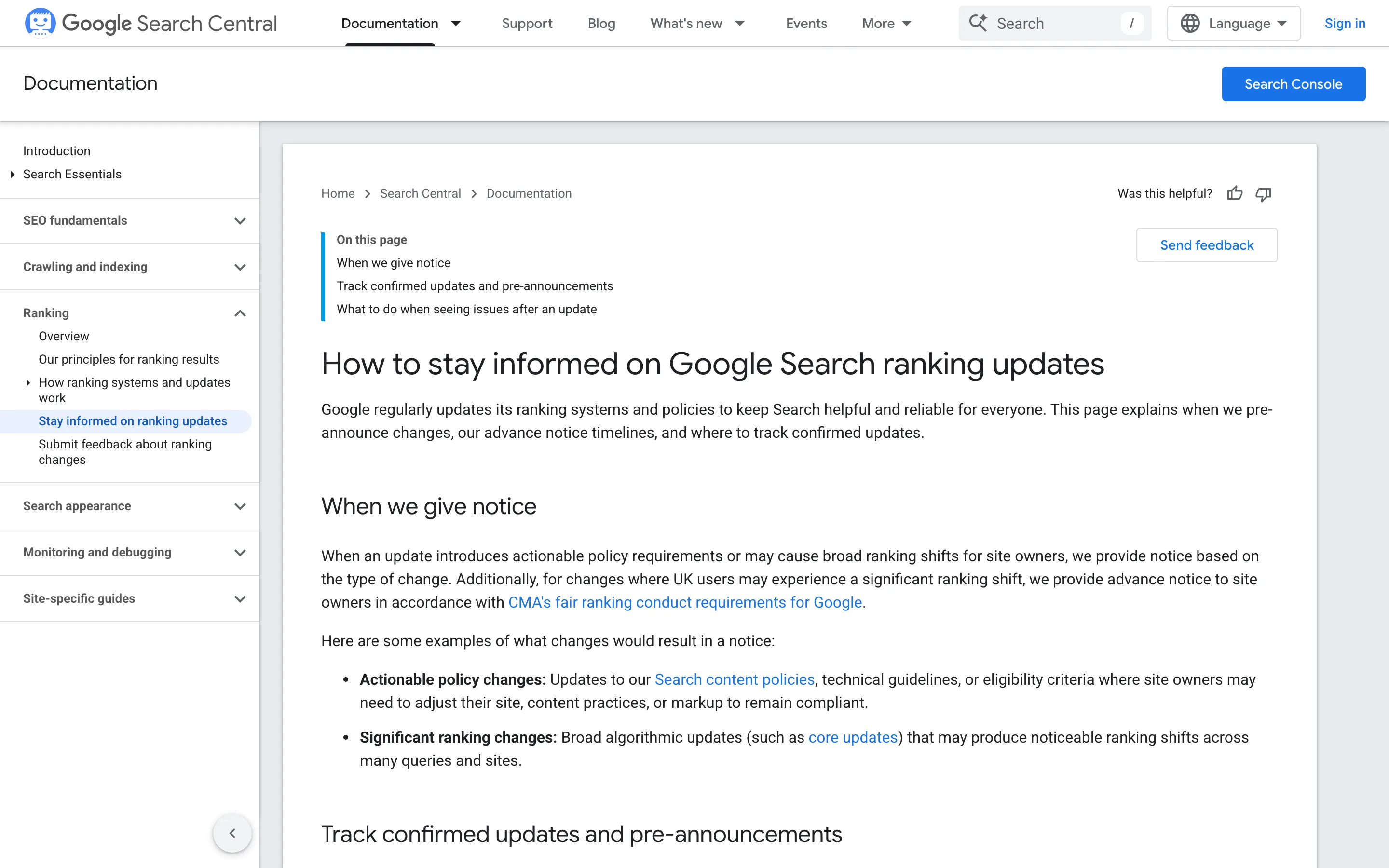
The same day, Google added a Ranking section to Search Central. Its page on staying informed about ranking updates says Google will give notice of "significant ranking changes", meaning broad updates such as core updates, and of "actionable policy changes" that may need edits to your site, content or markup. Pre-announcements, rollout starts and completion notices all go on the dashboard, which has an RSS feed. For UK searchers the notice follows the CMA's fair ranking requirements, which come into force on 17 December. Search Engine Journal's report puts the CMA minimums at 30 business days where publishers could act, and 15 for other significant changes.
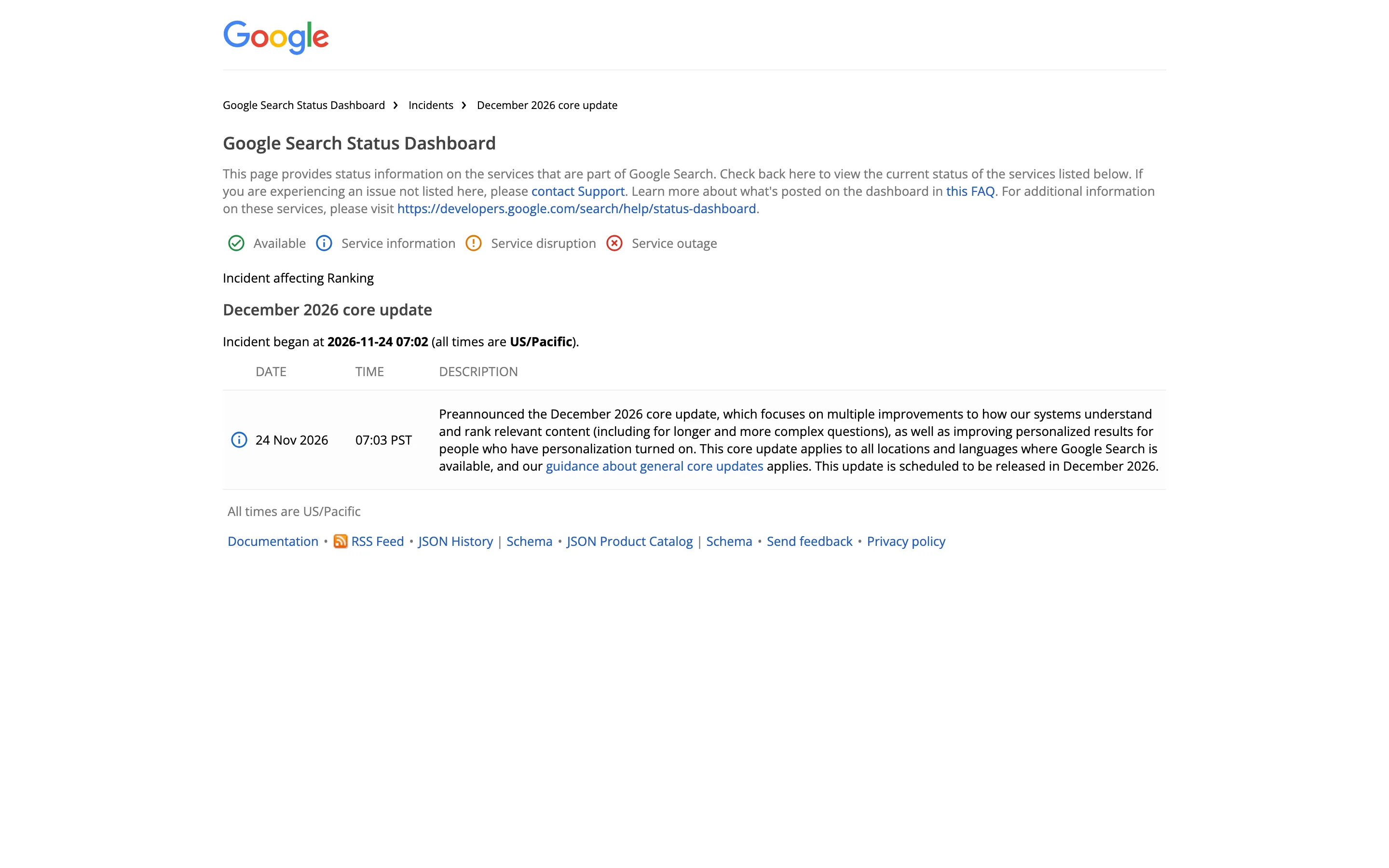
Google's page gives no number of days for its own notice. The December entry gives a month and no date. Plan for a start any day from 1 December.
The November core update started on 10 November and ran 13 days and 20 hours, so it closed around 24 November. Google's own advice is to wait until an update is marked complete "plus at least a week of post-rollout data" before you judge traffic in Search Console. That puts the earliest fair read of November at about 1 December.
Now count the other way. The last four core updates took between 11 days 21 hours (May 2026) and 18 days 2 hours (December 2025) to roll out. If December's starts early in the month, its movement begins before November's clean week is over, and the two blur into one line on your chart. A page that lost ground on 12 November and another that loses ground on 8 December will look like the same drop.
Until this week you found out about a core update when it was already moving. You got no warning and no clean before. A preannounced update hands you that before, and it's short.
Do this in the first days of December, once November's week of settled data is in.
We set out the template check in more detail in how to tell if a Google update caused your ranking drop. The baseline above is that check, done before the drop instead of after it.
Your own releases are the other thing that blurs an update. A template change, a redirect batch or a new internal-link module shipped on 9 December will move rankings in the same week as Google, and nobody will be able to tell which did what.
Pick the changes that touch many URLs at once and hold them until December's update is marked complete. Single-page fixes and new posts can go out as usual; log each one with its date. If something big has to ship, ship it now, before the rollout, so it has its own week on the chart.
Add the dashboard's feed, status.search.google.com/en/feed.atom, to Slack or your reader, so the rollout start reaches you the day it posts. Our Google ranking updates page keeps the same list with start dates and durations.
Google also published a feedback route. Verified owners use the Submit Feedback button in Search Console and name the update by hashtag, as in Google's example #NovemberCoreUpdate2026. Google asks for a Performance report snapshot, the exact queries and locale, your affected URLs, the URLs that outrank you in error, and before-and-after data. It reviews submissions "in aggregate" and says feedback "doesn't result in manual ranking adjustments for individual URLs." So file it for the record, with the baseline you exported, and don't expect a reply.
Treat the old rule of thumb, that most Google ranking updates go unannounced, as still true for the small ones. The named ones now come with a warning. Use the warning to measure.
If you want help reading November's numbers and setting a baseline for December, that's what we do.
Analytics

Analytics

Analytics
One email with what we published that week on SEO, content, conversion, analytics and paid acquisition. Unsubscribe in one click. Privacy notice.