Google update in October 2026? Check for poisoned rank data
Trackers flagged a Google update on October 21, the day Nozzle found 35.7% of tracked results poisoned. Read Search Console before you act on a drop.

If your rank tracker shows a Google update in October 2026, check Search Console before you act on it. Google hasn't confirmed any ranking update this month, and on October 21, the day volatility tools spiked, Nozzle measured 35.7% of the Google results pages it tracks as poisoned: complete, normal-looking pages with the real results swapped out.
So part of what the charts call an update is Google feeding bad pages to the tools that measure it. Your own clicks and impressions come from Google's logs, and nobody poisons those.
What moved this week
Two stories landed on the same days. On October 16, and again on October 20 and 21, Barry Schwartz at Search Engine Roundtable reported a spike in ranking volatility across more than a dozen trackers, Semrush, Mozcast, Sistrix, AccuRanker and Advanced Web Ranking among them. Forum posters described traffic jumping around by the hour. Schwartz also noted that the third-party tools had been struggling to track it.
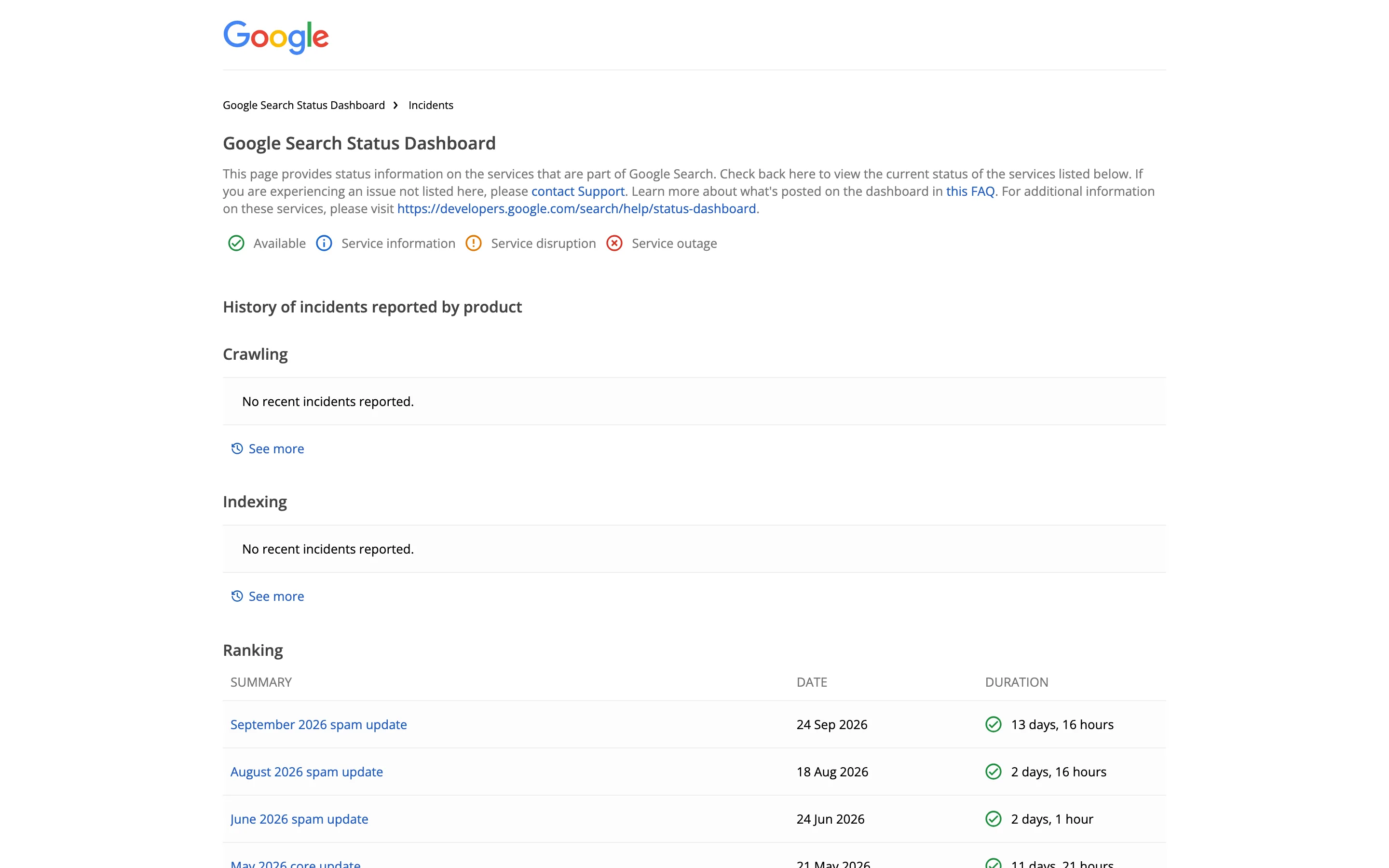
Google, meanwhile, has said nothing. The Google Search Status Dashboard lists no ranking incident after the September 2026 spam update, which started on September 24 and ran for 13 days and 16 hours. If a core update is rolling out, it isn't on the record.
Why the tracker charts can't settle it this month
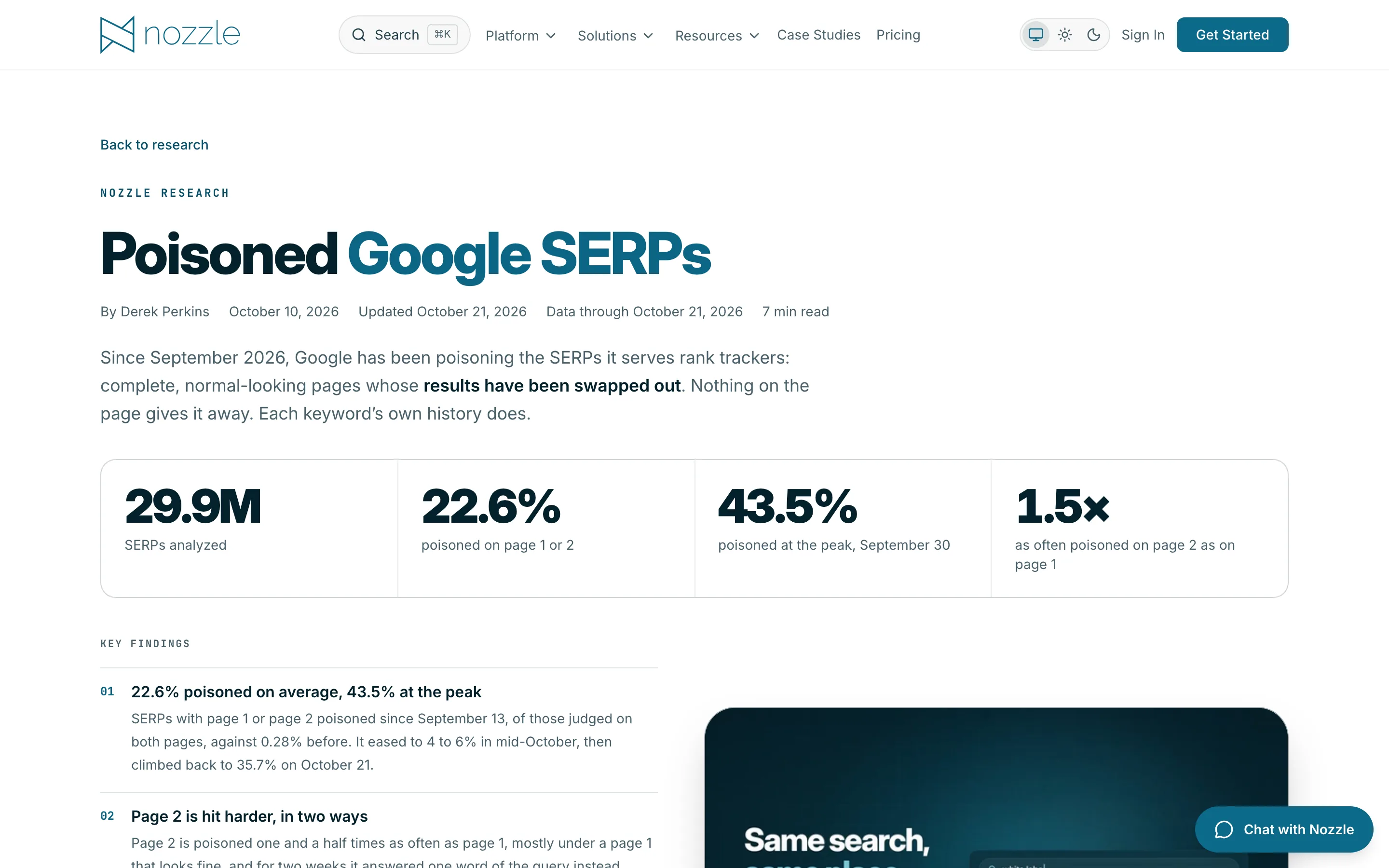
Nozzle, a rank tracking company, published Poisoned Google SERPs on October 10 and updated it on October 21. Derek Perkins and his team judged 29.9 million results pages collected since September 13 against each keyword's usual sites from a late-summer baseline. What they found:
- 22.6% of the pages came back poisoned on page 1 or page 2, against 0.28% before.
- The share peaked at 43.5% on September 30 and eased to 4 to 6% on October 14 and 15.
- Then it came back: 25.9% on October 19 and 35.7% on October 21, the worst day since October 8.
- On a poisoned page, a tracked site missed the top 10 60.8% of the time, against 2.7% before.
- 67.9% of poisoned pages had their usual sites back within three days.
Put those dates next to the volatility reports. The poisoning climbed back after October 15 and hit its worst day in two weeks on October 21, the day the chatter peaked. A volatility index averages position changes across a set of keywords. If a third of the pages it reads that day are fake, the index rises whether Google changed its ranking or not.
That doesn't prove nothing happened. Some site owners on the forums describe drops in their own analytics, Discover included, and analytics data isn't scraped. It does mean a tracker chart on its own has stopped being evidence this month.
How to judge an October ranking drop in Search Console
Search Console is the one source here that Google can't poison for you, because it reports what real searchers saw. Nozzle's own advice ends in the same place: if a site "disappears" in a tracker and Search Console still shows impressions and clicks, nothing happened to the site. Run four checks, in order.
- Confirm the data is current. Look at the last date in the Performance report before you read any line. On October 11 the report ran more than 64 hours behind, according to Search Engine Roundtable, and a missing day at the right edge of a chart looks exactly like a drop.
- Compare full weeks. Set the last 7 complete days against the 7 before, then against the same week in September. One bad day in a tracker is noise. Seven days down in Search Console is a pattern.
- Read clicks and impressions before position. Average position no longer maps to a rank, so it's the weakest of the three numbers. Impressions tell you whether Google still shows the page at all.
- Split Search from Discover. Discover has its own report. The forum threads this week mix the two, and a fall in Discover alone says nothing about where your pages rank in web search.
If all four checks come back clean, the drop lives in your tracker. Leave the pages alone.
How to read your rank tracker until this settles
Keep it running. Change how you read it.
- Ask your vendor how they handle poisoned pages. Some now recheck a result against the day before and the day after before they store it. If yours can't answer, treat every single-day drop as unconfirmed.
- Judge each keyword against its usual sites over several weeks, as Nozzle does. Yesterday may have been poisoned too.
- Read page 2 with extra suspicion. Nozzle found it poisoned 1.5 times as often as page 1.
- Report to clients or your boss from Search Console first, with tracker positions as context.
When Google does confirm an update, it goes on our list of confirmed Google ranking updates, read straight from the dashboard. Until then, October makes the case for tracking unannounced updates with your own data even stronger. The third-party charts most teams used for that job are now the shakiest part of it.
If you want a second pair of eyes on an October drop, or a Search Console baseline you can trust when the trackers can't be, that's what we do.


