Search Console platform properties: verify them this week
Google now reports how your Instagram, TikTok, X and YouTube posts perform in Search. Verify the accounts now so the query data starts building.

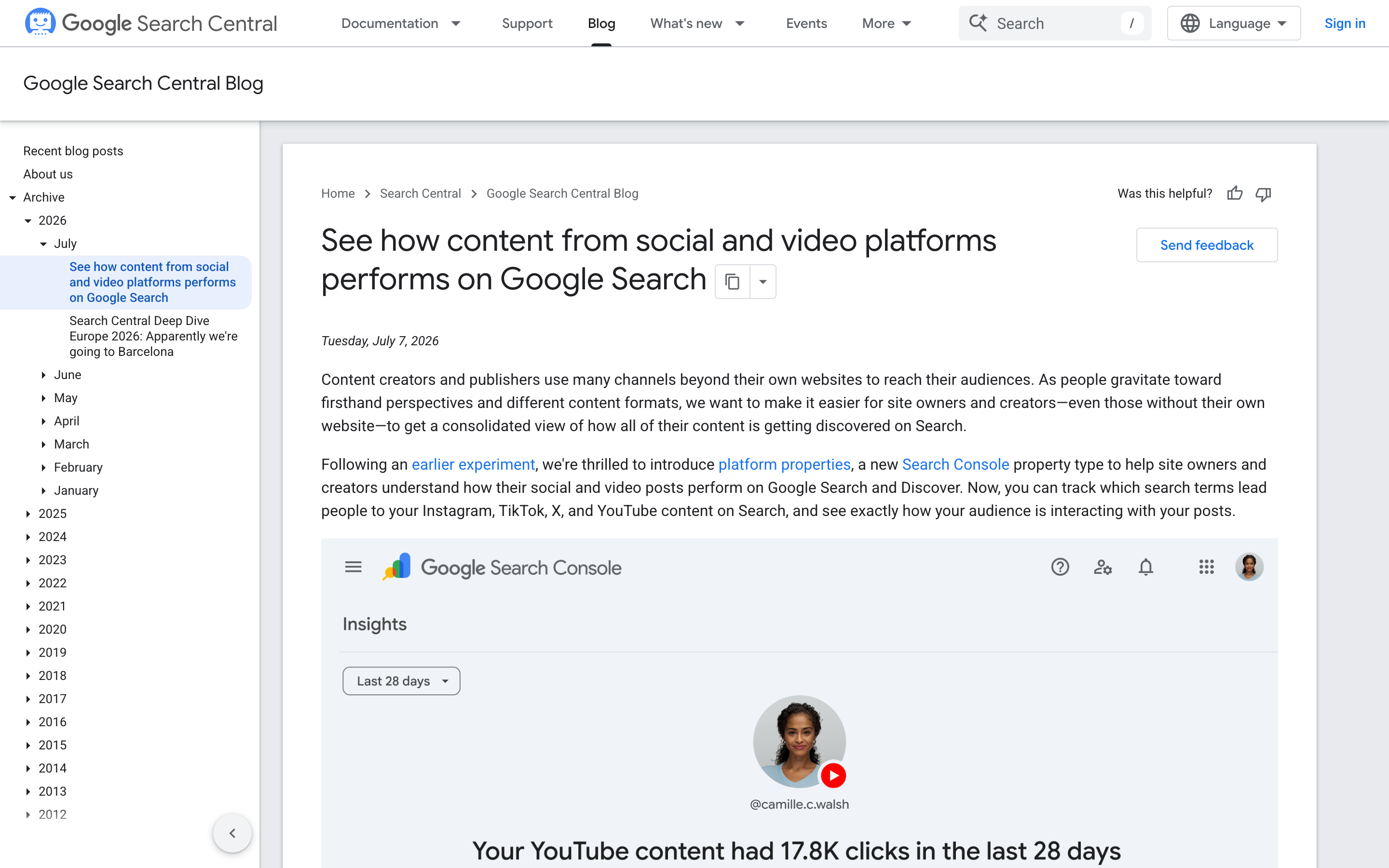
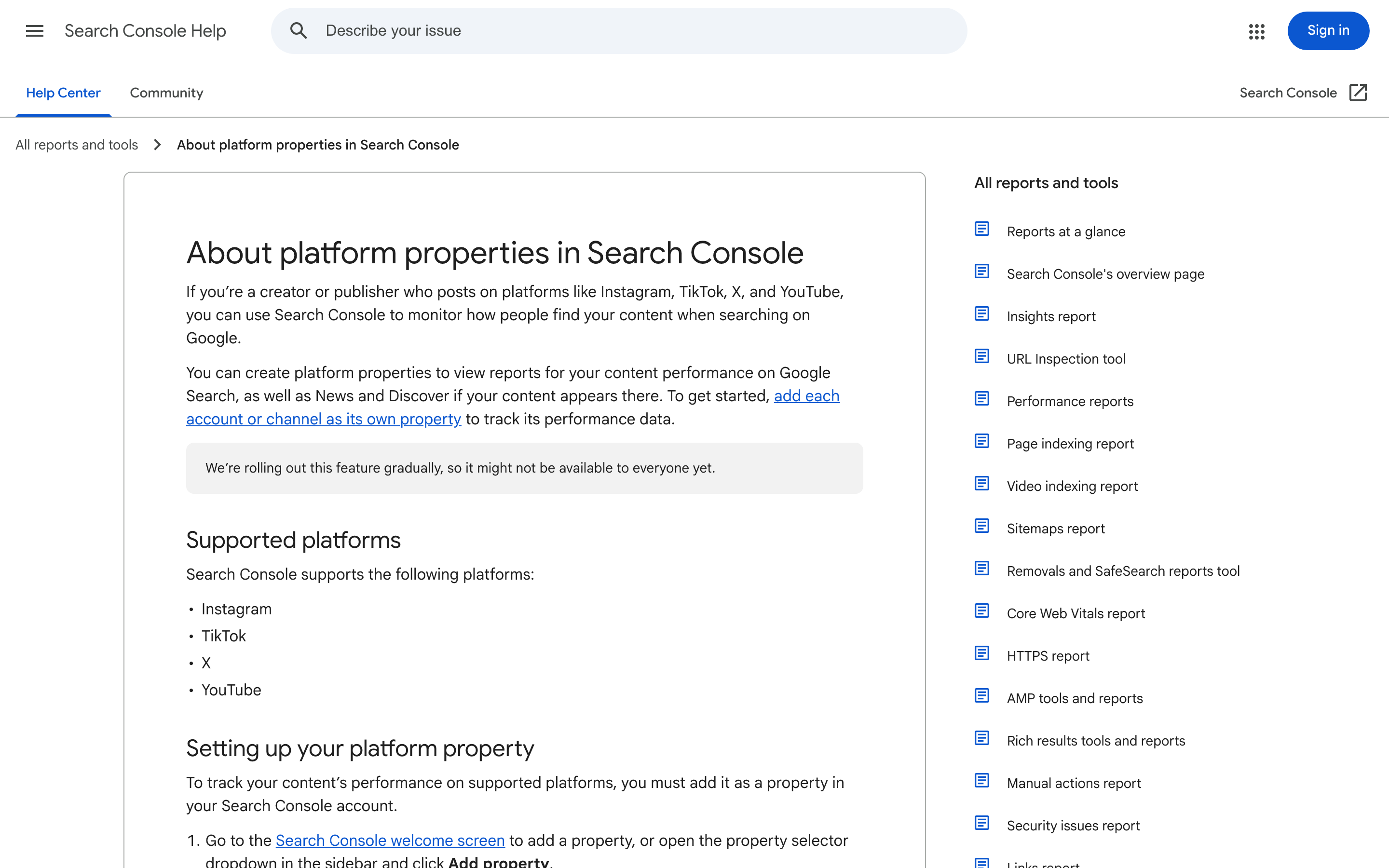
Google added a property type to Search Console called platform properties, and it reports how your Instagram, TikTok, X and YouTube posts perform in Google Search. Verify the accounts you already post from this week. Data takes a few days to collect after setup, and the rollout is still landing account by account, so the sooner you connect them the sooner you have something to read.
Google published the news on the Search Central blog on 7 July 2026, with the mechanics written up in the Search Console help documentation. It builds on an experiment Google ran in December 2025.
What Search Console platform properties report
Three views, all of them familiar if you use Search Console for a website.
- Performance. Clicks, impressions, click-through rate and average position, filterable by post and by query.
- Insights. Recent traffic trends, your top posts, and how people arrive at your account from Google.
- Achievements. Milestones, such as passing a click threshold in a rolling 28-day window.
Two details from the help doc matter more than the feature list. First, this is the only Search Console property you can verify without owning a domain: you authenticate the social account itself. Second, the numbers cover Google Search, News and Discover only. Engagement inside Instagram or TikTok stays where it always was, in the platform's own analytics.
Your social profile is a second ranking surface
Here is what changes for a B2B or SaaS team. Your YouTube walkthrough has been ranking for product queries for years. So has the founder's X thread and the demo clip on TikTok. Google was already sending people there, and you had no way to see which searches did it. Engagement numbers told you what your followers liked. They said nothing about what strangers were searching.
Now you get the query list. That moves social content planning onto the same footing as your blog: you pick a topic because a query exists, then you decide which surface should answer it.
What to do in the first two weeks
Verify all four platforms you're active on, even the ones you consider dormant. A quiet account with three ranking posts is worth knowing about.
Then wait. New properties show partial data at first, so read nothing into week one. Once a full 28 days lands, export the query report and sort every query into three piles:
- Your site already ranks for it. Check which one Google prefers and where each sits. If a 40-second clip outranks your 1,800-word page, the page has an intent problem, not a length problem.
- Your site should own it. Commercial queries, comparison queries, anything with buying intent. A post sends the click to Instagram. A page sends it to you, with your pricing one scroll away. Write the page.
- Only a post can win it. Face, voice, hands, screen recording, opinion. Queries where a person on camera answers better than a paragraph. Keep publishing there and stop trying to convert those into blog posts.
That third pile is the useful one. It tells you where video and social earn their keep in search, with numbers behind it rather than a hunch.
Two traps worth naming
The clicks land somewhere you don't control. A click counted in a platform property goes to Instagram or YouTube, not to your site. It won't appear in GA4 as a session. If you report on pipeline, keep these figures in their own line and label them clearly, or someone will add them to site traffic and the totals will stop meaning anything.
Position across surfaces reads differently. An average position of 4 for a TikTok post sitting in a video carousel is a different result from position 4 in the blue links. Compare each property against itself over time and skip the cross-property league table.
How this fits the rest of your Search Console work
Google has been widening what Search Console measures all year. The generative AI reports arrived in June, and we wrote about reading Search Console's AI performance report when they landed. Platform properties extend the same idea in a different direction: more of the places Google shows your work, reported back to you.
The pattern underneath both is worth planning around. Google keeps answering more queries without sending a click to your domain, and the assets that stay visible are the ones tied to your name. Profiles, channels, and the searches people run for your brand. That's the same argument behind branded search as your steadiest bet, and platform properties finally give you a way to measure part of it.
Ten minutes of verification today buys you a query list in a month. Few SEO tasks pay back that well.
If you want help turning that query list into a content plan that covers both your site and your channels, that's the kind of work we do.


