How Linear's changelog powers content-led SEO
Linear turns its release notes into indexable pages and a free method guide into pillar content. Here's the content-led SEO play, and how to copy it.

Linear publishes a new changelog entry on a near-weekly rhythm, and that steady stream of dated, structured pages does more for its search presence than most companies get from a blog. Each entry is its own URL, each one links deep into the product docs, and together they signal that the site is alive. This is content-led SEO built out of the work the team already does: shipping.
What Linear actually publishes
Open the changelog and you see product updates in reverse chronological order, each with a date, a headline, a short write-up, and a screenshot or a quick demo. Under the headline features sit tidy sections: Fixes, Improvements, API changes, keyboard shortcuts. It reads like release notes because it is release notes. The move that matters is that Linear treats every release as a page worth a title, an image, and a permanent link. The clean structure also makes each entry easy for AI overviews and featured snippets to quote.
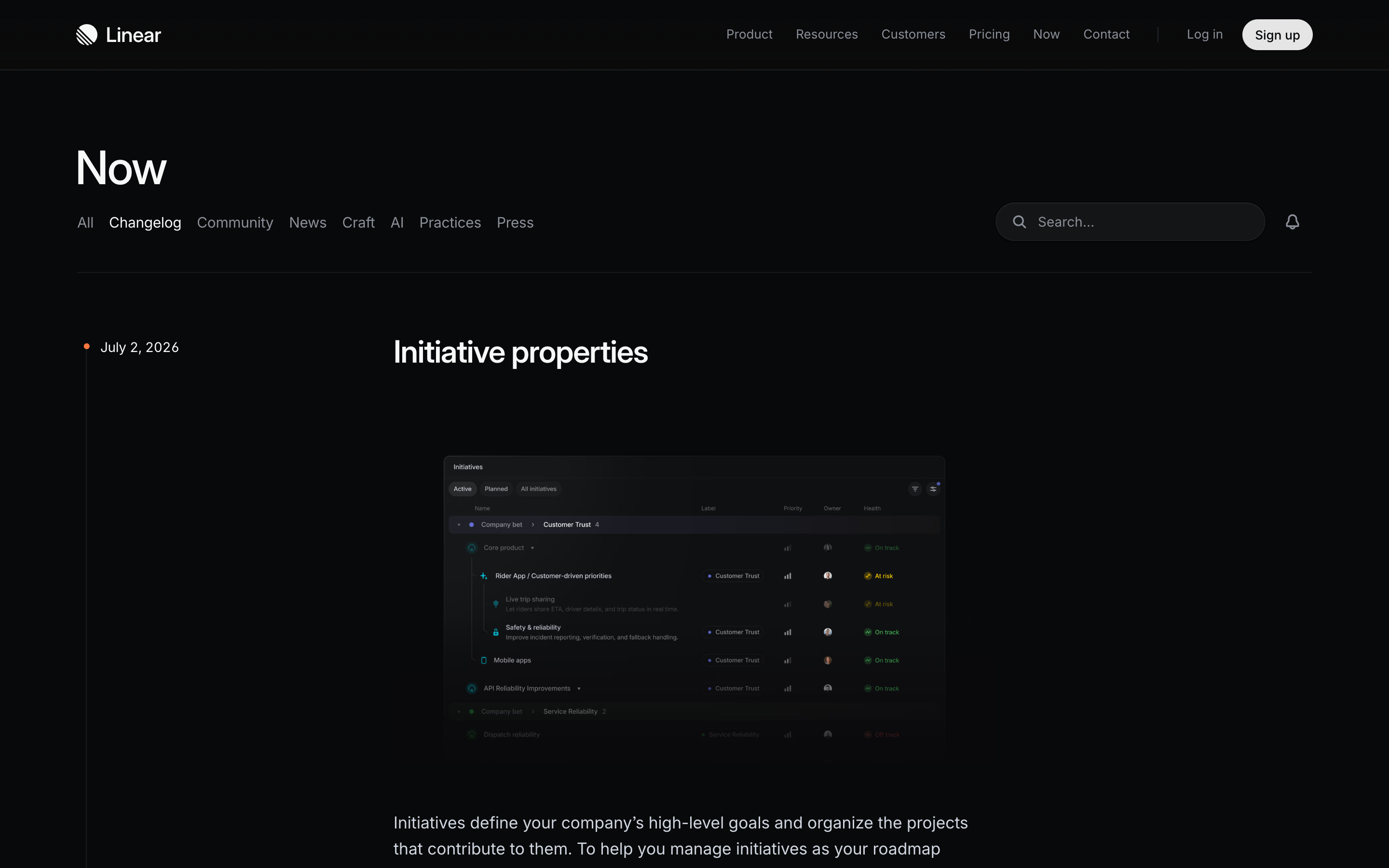
The cadence is the real product here. One release note is a footnote. A hundred of them, each dated and indexed, become an archive that keeps pulling in searches for feature names months after launch.
Why a changelog can beat a blog
A blog needs someone to invent a topic, write 1,200 words, and edit it. A changelog writes itself out of the sprint. Linear gets three things almost for free. Freshness: dated entries land often, so crawlers keep coming back. Depth: every entry links to the docs and feature pages it describes, feeding internal links to the pages that actually sell the product. Intent: someone searches a feature name next to "Linear" and lands on the exact note that answers them, already halfway to signing up.
Most teams sit on the same raw material and waste it. They ship features into a Slack channel or a buried release-notes modal that search engines never crawl. If you write internal release notes, you already write content. The gap is publishing it as pages Google can index.
The Method: one pillar that earns the brand
Alongside the changelog, Linear runs The Method, a free guide to how they think software should get built. It runs 13 articles across three sections, Introduction, Direction, and Building, covering goal-setting, scoping, momentum, and shipping in public. This is pillar content: broad enough to rank for practice queries, opinionated enough that people share it, and threaded with quiet reasons the product fits the philosophy.
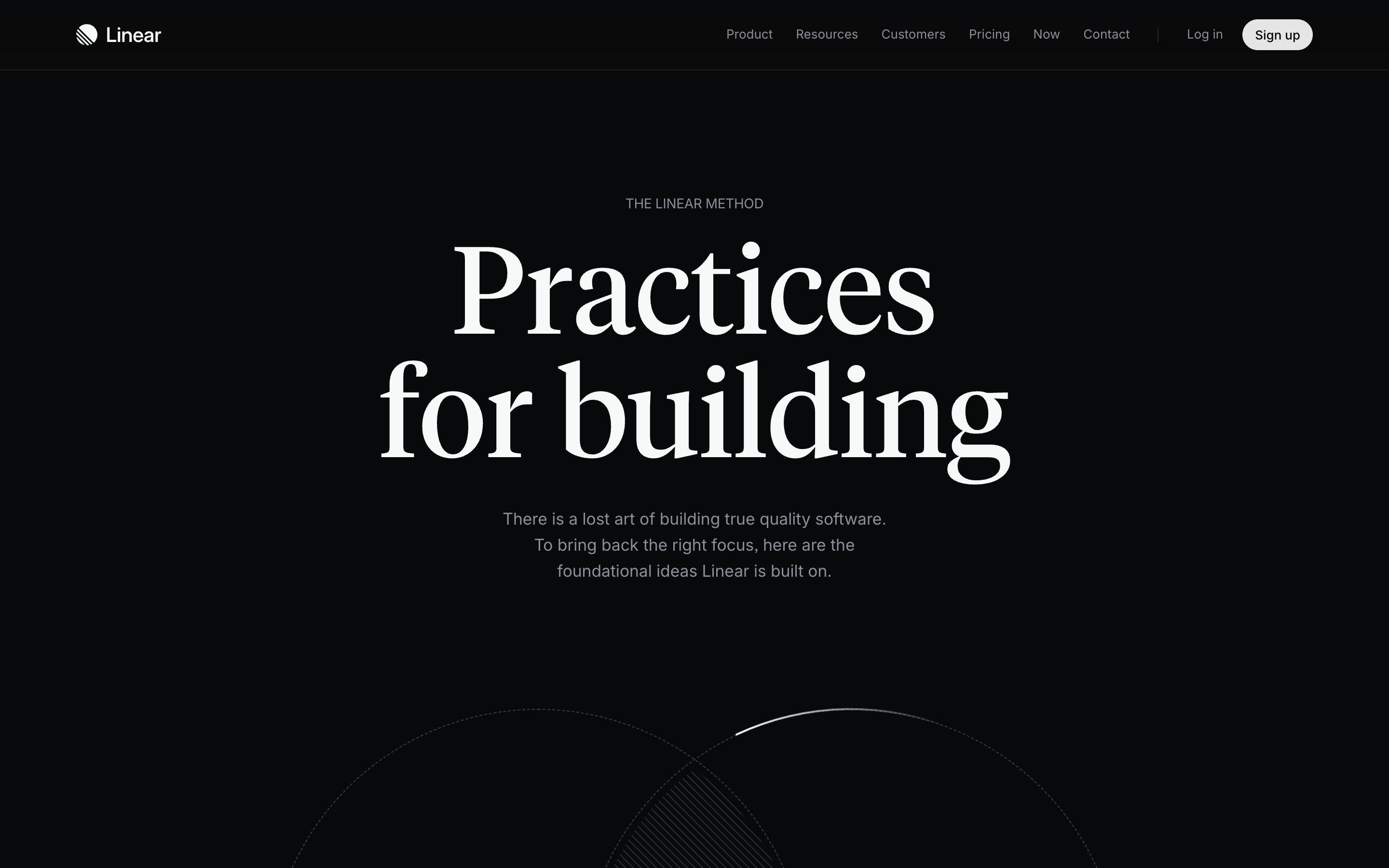
The changelog and the Method do different jobs. One catches people searching a specific feature. The other catches people searching how to run a product team. One proves the tool moves fast. The other proves the company has a point of view. Both are content, and neither reads like an ad.
Copy this content-led SEO play on Monday
You don't need Linear's design team to run this. Three moves get you most of the way. First, publish your release notes as real pages, one URL per update, with a date and a title people would actually search. Second, link every note to the product or docs page it describes, so the fresh page passes authority to the page that converts. Third, pick one strong opinion your team holds about your craft and write the pillar guide only you could write, then keep the changelog pointing back to it.
The hard part isn't the format, it's the discipline. A changelog only compounds if it keeps going, so make publishing part of the release checklist and give one person the job of turning each sprint's shipped work into a dated page the same day it goes live.
If you want to go deeper on the pillar side, we've written about how to write one page that ranks instead of ten that don't, and the same logic that made Notion's template gallery a growth loop is at work here: take something you already make and turn it into a page that compounds.
If you want help turning your release notes and your sharpest opinions into pages that rank and link back to your product, that's the kind of work we do at vibhe.


