Amplitude's site has three CTAs. Split your target CPA.
Amplitude asks for three different conversions on one site. Each is worth a different amount, and one target CPA across them buries your best campaign.

One target CPA only works if every conversion inside the campaign is worth about the same. Amplitude makes that easy to see, because its site asks visitors for three separate things. A free account, a card-on-file self-serve plan, and a sales conversation carry very different money. Send paid traffic to all three under a single target and Google Ads will chase the cheapest conversion, because that is what you asked it to do.
Here is what the pages actually say, and how to turn that into three targets instead of one.
Three CTAs on one homepage
The hero pairs a filled black "Start for free" with an outlined "Talk to sales". Top right, the header carries "Login", "Contact sales" and "Get started". So the first screen opens a self-serve door and a sales door at the same time, and gives the self-serve one the visual weight.
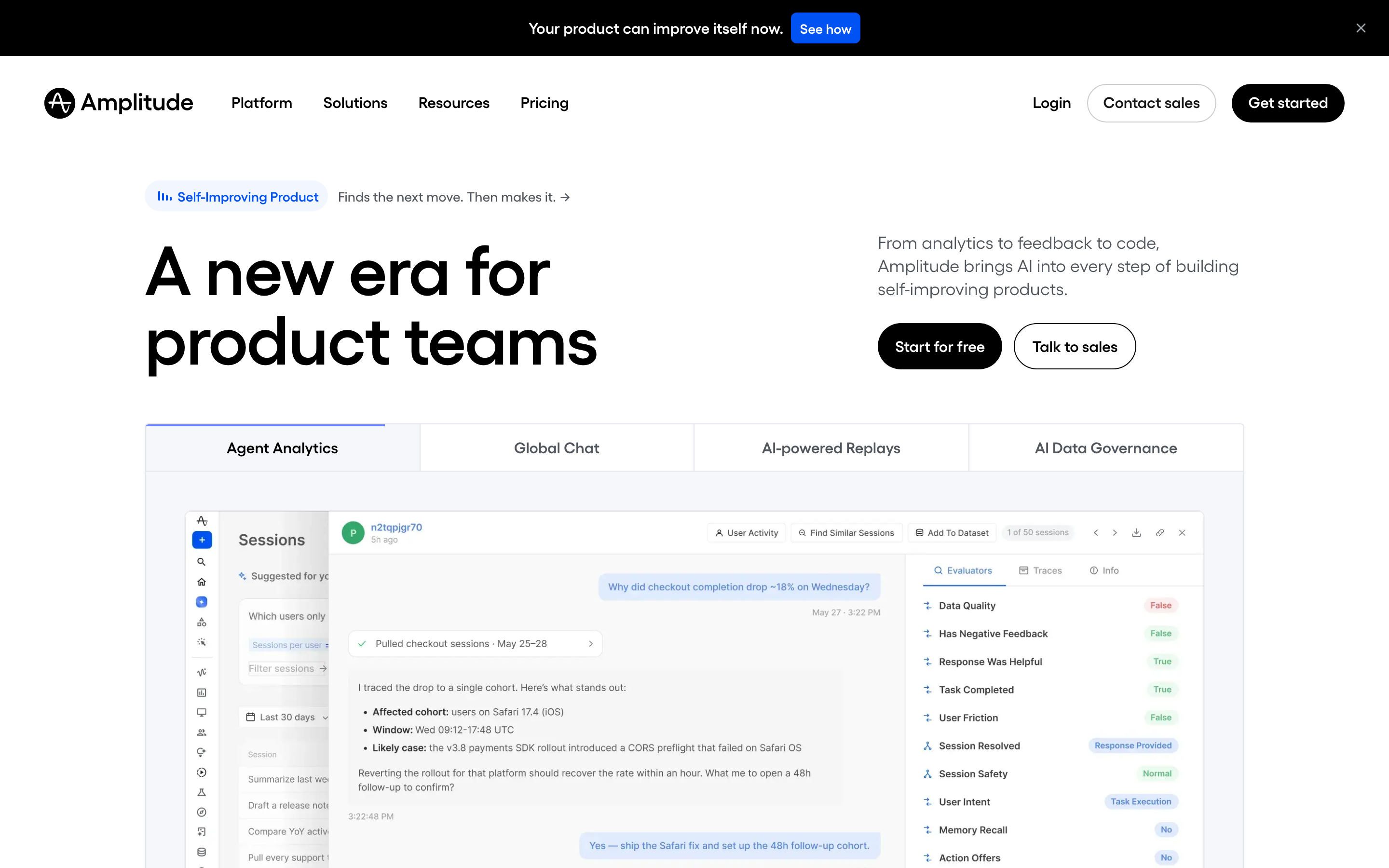
That works for organic visitors, who arrive with their own intent and pick a door. For paid traffic it turns into a measurement problem. The same click can become a free signup worth a few dollars in expected value or a demo request worth a few thousand, and both land in the same conversion column.
The pricing page names the split
Amplitude's pricing page makes the three actions explicit. Free sits at $0 with "2M Events/month forever" and a button reading "Start for free", under the line "No Credit Card required." Plus, badged Recommended, says "Starts at $0" with "First 2M Events/month free", a "Get started" button, and this time "Credit Card required." Growth and Enterprise both read "Custom", both price on events, and both send you to "Contact sales".
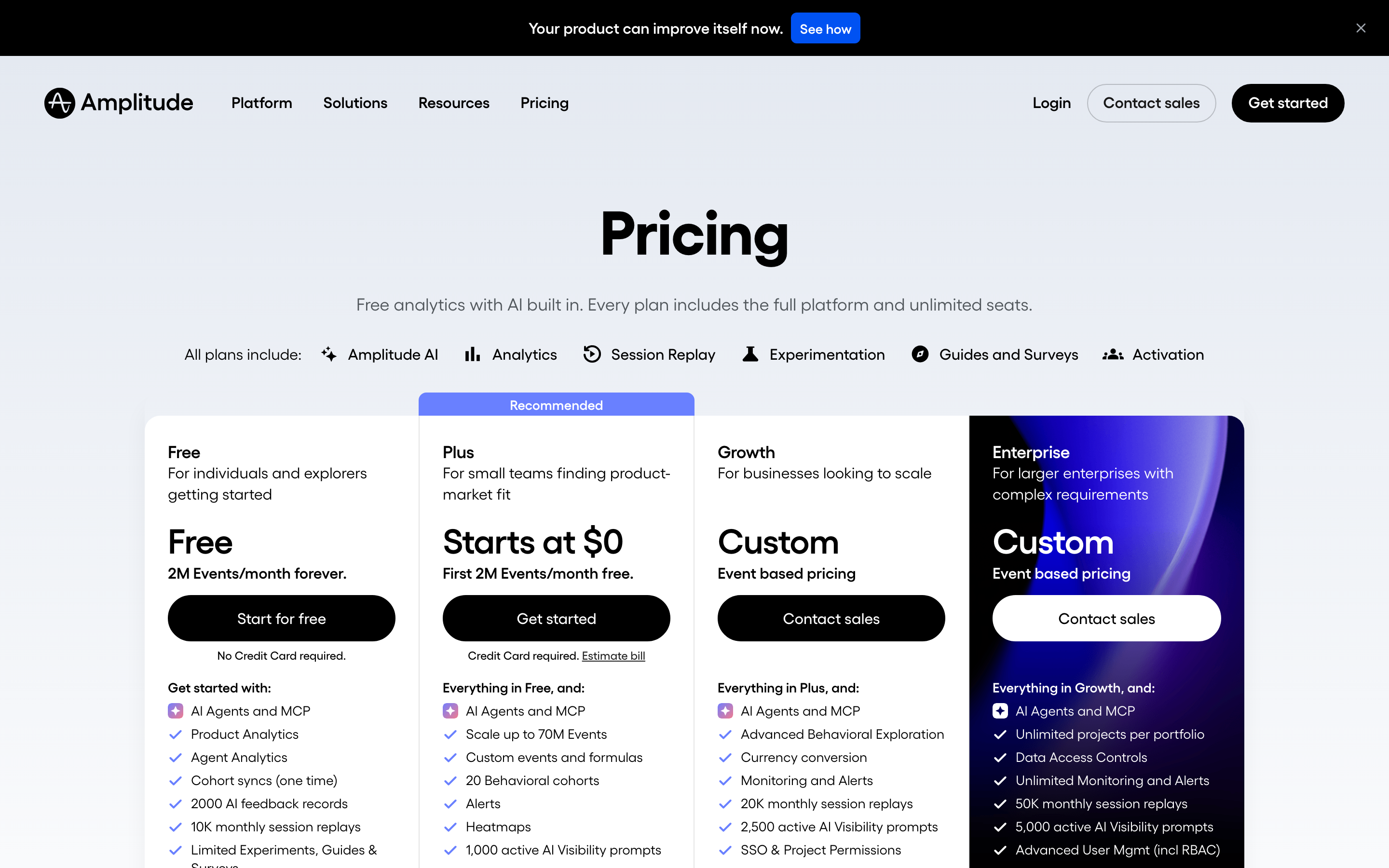
Read the four buttons and you have the funnel. One action with zero friction. One that takes a card. Two that take a sales cycle. Three prices, three sales motions, and three different amounts you can afford to pay for the click that starts them.
The demo page drops the nav
amplitude.com/demo is the clearest sign the team knows this. The page keeps the logo and throws the navigation away. No Platform, no Solutions, no Pricing, no "Start for free" competing for the click. The left column is a form: Work Email, First Name, Last Name, Company, Country, two consent checkboxes, Submit. The right column carries the headline "See Amplitude in Action", a list of customers including Paypal, Adidas and Atlassian, and three logos.
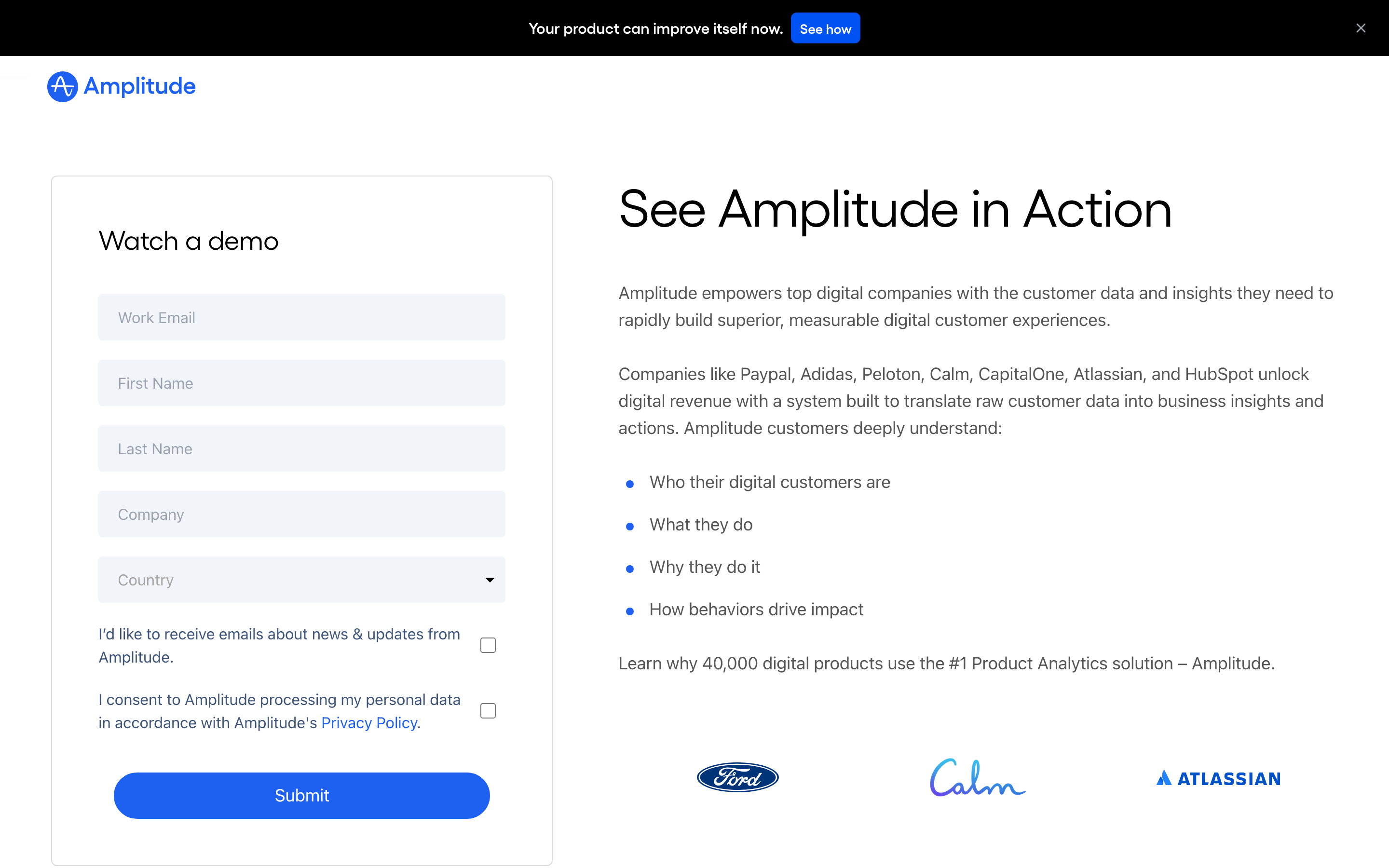
One page, one ask, no escape routes. That is the shape a page takes once a team has decided which conversion the traffic is being bought for. Copy that shape before you copy anything else on the site.
What the split does to your target CPA
Amplitude has published enough for the arithmetic. Franciska Dethlefsen told Growth Unhinged that before the self-serve plan went live in October 2023 the company turned 0.1% of free accounts into paying customers, and that the number has since moved close to 2%. The same piece describes a sales team handling deals in the $10,000 to $15,000 range.
Run those two paths side by side with your own close rates. At 2%, fifty free accounts produce one paying customer. Call that customer worth $1,000 in the first year and a free signup carries roughly $20 of expected value, so at a 3x return the campaign can pay about $7 per conversion. Now take a demo request that closes at 20% into a $12,000 deal: $2,400 of expected value, and the same 3x lets you pay $800. One target across both gives you one of two failures. At $7 the demo campaign never spends. At $800 you buy free signups for a hundred times what they return.
The trap is quiet. Your blended cost per conversion looks healthy every month because the cheap action carries the average, while the campaign that books actual revenue sits starved at the bottom of the report.
How to split it in your Google Ads account
- List every conversion action your site asks for and write the expected value beside each one. Close rate times deal size, not a feeling.
- Give each action its own campaign and its own landing page. One page, one ask, the way Amplitude built its demo page.
- Set one primary conversion goal per campaign. Everything else moves to secondary, so it still reports without steering the bidding.
- Set the target from that action's value, never from the account average. The method is in how to set a target CPA before you launch a paid campaign.
- Move one target at a time and wait for volume. Changing several at once tells you nothing about which change worked, and switching to Target CPA bidding has failure modes worth reading first.
Amplitude did not arrive at a stripped demo page by accident. Someone decided what that page was for, then removed everything that could pull a click somewhere else. The bidding follows the same logic: name the action, price the action, buy the action.
If you want help pulling a paid account apart by conversion action and setting a target each one can defend, that is the kind of work we do.


