Google says you don't need to chunk content for AI search
Google's July 10 guide puts content chunking on the ignore list. Here's what actually gets your pages cited in AI answers, and what to stop building.

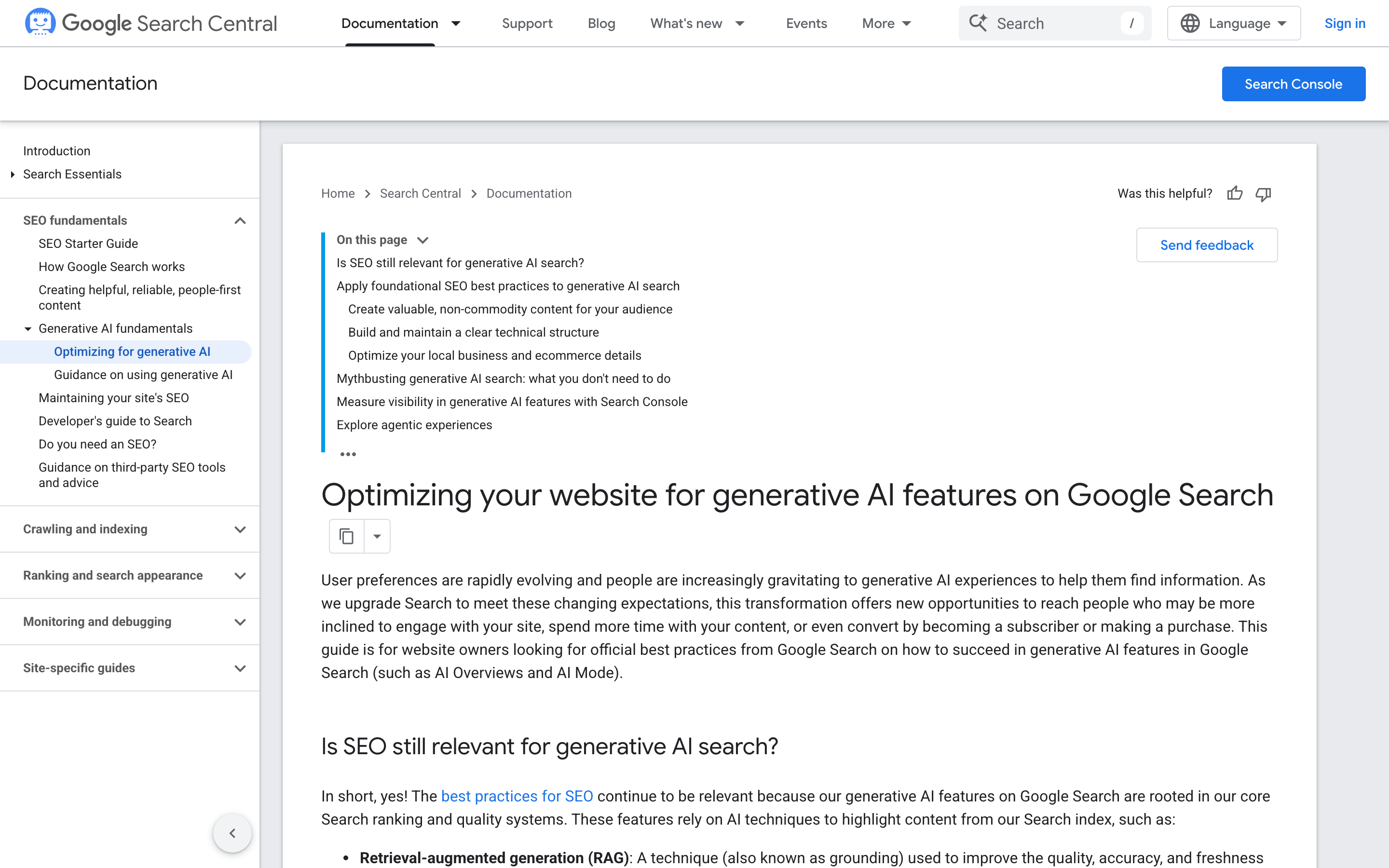
Google updated its AI optimization guide on July 10 and put content chunking on the list of tactics to ignore. You don't need to break an article into tiny pieces for AI systems to read it. The exact line: "There's no requirement to break your content into tiny pieces for AI to better understand it."
So a year of advice about pre-chopping pages into snippet-sized blocks was aimed at a problem Google says it already solves. That frees up time. It also raises a sharper question: if chunking content for AI is out, what actually gets your pages into an AI answer?
What Google actually said on July 10
Two claims sit side by side in the guide. First, its systems read multi-topic pages fine and pull the relevant passage on their own, so you don't have to fragment the article yourself. Second, you don't need llms.txt, AI text files, or extra Markdown either. "Google Search ignores them," the guide says, and adding them will "neither harm nor help your site's visibility or rankings."
Google also settled the naming fight. AEO, GEO, whatever the acronym, the guide calls it still SEO. The work that earns a spot in an AI answer is the work that earned a good ranking before.
Passages, not pages
Here's the part worth acting on. Google's AI features retrieve pages through core ranking, then read the specific passage that answers the query. The unit that gets cited is the passage, not the whole page. A page sitting at position 12 with one clean, self-contained answer can get pulled into an AI response over a page at position 2 that buries the same answer three scrolls down.
Say someone asks how much technical SEO costs. A page that opens its pricing section with a real number and a range is quotable. A page that opens with "pricing depends on many factors" and reaches the number in paragraph four is not, even if it ranks higher. Same fact, different odds of being cited.
That changes where the effort goes. Ranking still gets you retrieved. Being quotable is a second, separate job, and it lives at the paragraph level.
How to write a passage AI can lift
The move isn't fragmenting the article. It's shaping each section so it stands on its own if a model reads only that part.
- Answer the heading's question in the first 40 to 60 words under it. Put the payoff before the setup.
- Make each section self-contained. A paragraph that starts with "as we saw above" can't be lifted without the context above it. Rewrite it to carry its own meaning.
- Name the subject in full at least once per section. Bare pronouns and "it" fall apart when a passage is read alone.
- Point each heading at a real question people ask. This is the same discipline as matching a page to search intent, applied one level down, heading by heading.
Keep the full piece: the argument, the examples, the flow. Just make sure any single section reads cleanly if it's the only part someone, or some model, ever sees.
What to stop doing this week
Drop three habits. Splitting one topic across five thin pages to feed AI. Building llms.txt for Google's benefit, since its crawlers don't even request the file. And treating "AI optimization" as separate work with its own budget and its own team. It's the same page and the same ranking system, with better-shaped sections.
Then measure it. Search Console's AI performance data shows where you already turn up in AI surfaces, so you can see which pages get cited and which get skipped. We wrote a walkthrough on reading that report, which is the fastest way to find the sections worth rewriting first.
If you want help turning pages you already have into passages that get cited, without rewriting the whole library, that's the kind of work we do.


